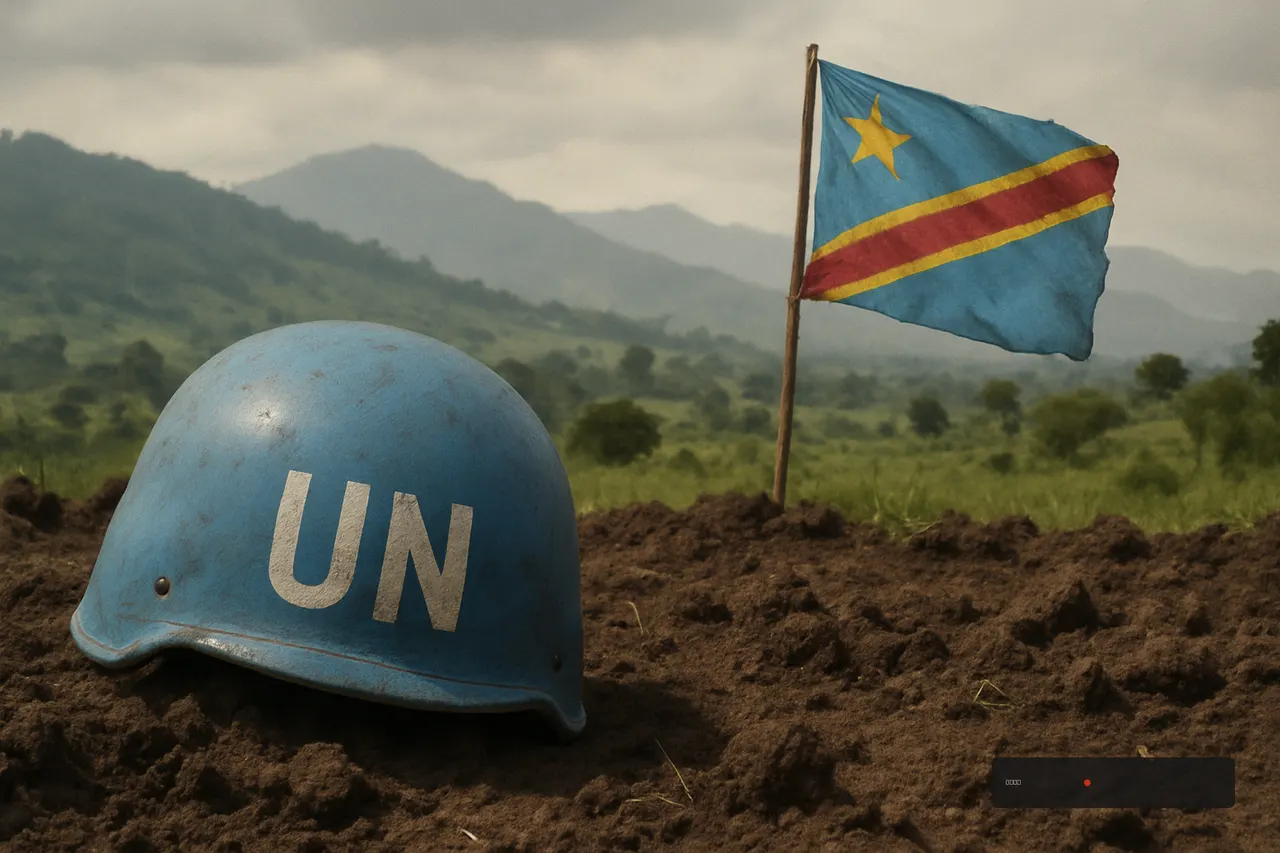
James Swan, newly appointed head of the United Nations Stabilization Mission in the Democratic Republic of the Congo (MONUSCO), delivered his first briefing to the UN Security Council on June 26, 2026. Nearly a year after the DRC and Rwanda signed a peace agreement in Washington, DC, Swan urged all parties involved in the peace processes for the volatile eastern region to maintain momentum and fully implement their commitments.
He highlighted that the peace efforts, including the Doha Framework for a Comprehensive Peace Agreement signed in Qatar and mediation led by the African Union, have established "an agreed pathway" to address the protracted conflict in eastern DR Congo. Swan emphasized, “It is now imperative that momentum be maintained, and that the commitments agreed to by the signatories be fully implemented.”
Despite these efforts, Swan warned that the security situation in eastern provinces such as North Kivu, South Kivu, and Ituri remains highly unstable. Civilians continue to suffer amid ongoing clashes between the Alliance Fleuve Congo/23rd of March Movement (AFC/M23), supported by Rwandan forces, and the Congolese Army (FARDC) allied with the Wazalendo armed group. In some areas, FARDC troops receive support from the Democratic Forces for the Freedom of Rwanda (FDLR), an ethnic Hutu armed group founded by former perpetrators of the 1994 genocide against the Tutsi.
The use of offensive drones, artillery, and heavy weapons has sharply increased risks to civilians and infrastructure. During the same period, the UN documented 1,221 human rights violations, including conflict-related sexual violence committed by armed groups and members of the defense and security forces.
Compounding the crisis, an Ebola outbreak declared on May 15 is unfolding in conflict-affected and urban areas with overstretched health services, posing significant risks of further spread.
Loading comments.