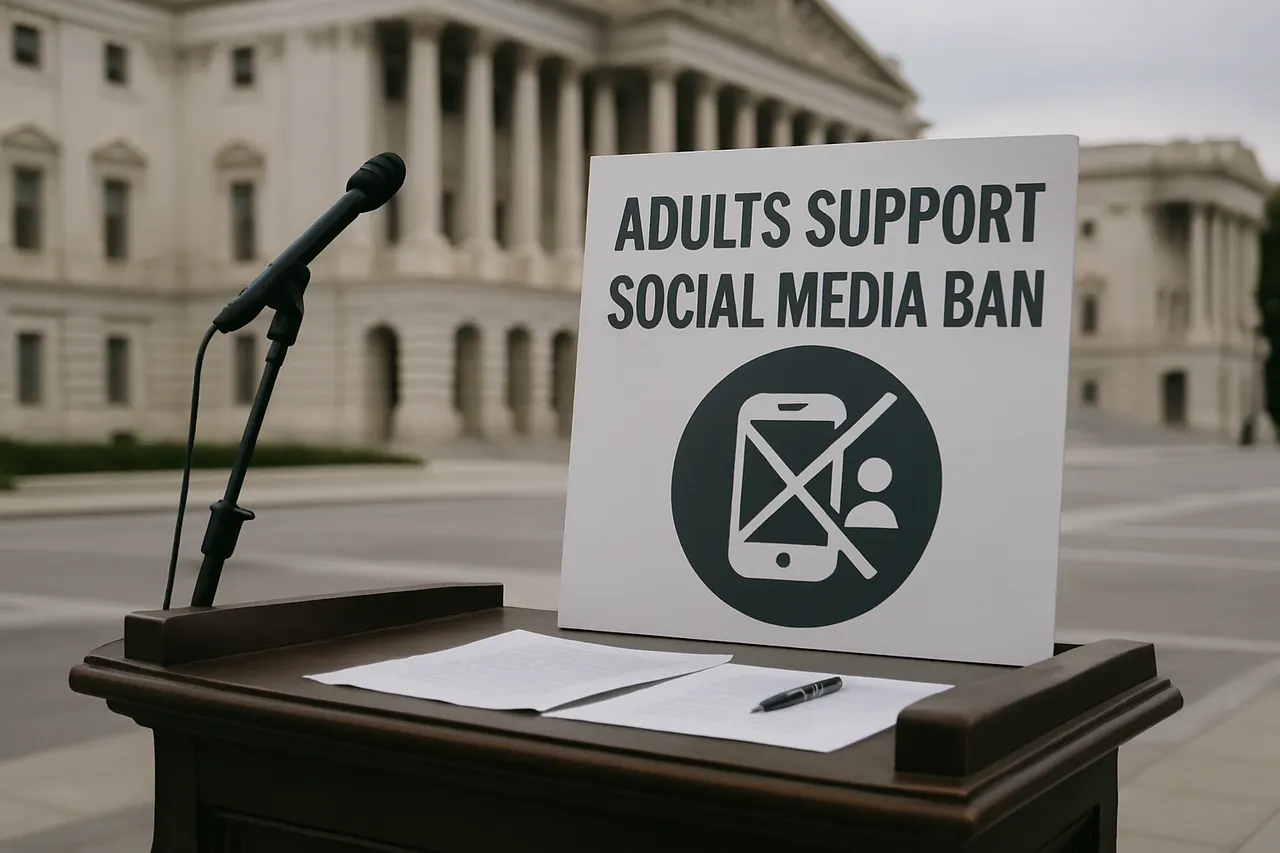
As the United States marks 250 years of freedom, a majority of American adults favor limiting children's online freedoms. According to a Pew Research Center poll conducted from May 26 to June 1, 2026, 56% of U.S. adults support banning social media use for anyone under 16 years old.
The survey of 9,750 adults highlights bipartisan agreement, with 59% of Republicans and Republican-leaning independents and 54% of Democrats and Democratic-leaning independents endorsing the ban. This trend aligns with similar age-based restrictions being considered in countries like Australia and the U.K.
Supporters of the ban, including social psychologist Jonathan Haidt, argue that social media has severely harmed teens' mental health and social lives. However, a 2022 Pew study found that 80% of teens felt social media helped them feel more connected to their friends, 59% reported neutral effects, 32% noted positive effects, and only 9% reported mostly negative effects. Among those with positive views, 46% cited connections and socializing as key benefits.
Last week, a group of Democrats unveiled a social media crackdown plan as their first major Project 2029 proposal, signaling legislative momentum on the issue.
Conversely, free speech advocates, including the Foundation for Individual Rights and Expression, warn that age verification measures carry risks such as data breaches, excessive data collection, legal censorship demands, corporate and government misconduct, pressure to self-censor, and potential violations of the First Amendment.
This debate underscores the tension between protecting youth online and preserving individual rights in the digital age.
Loading comments.