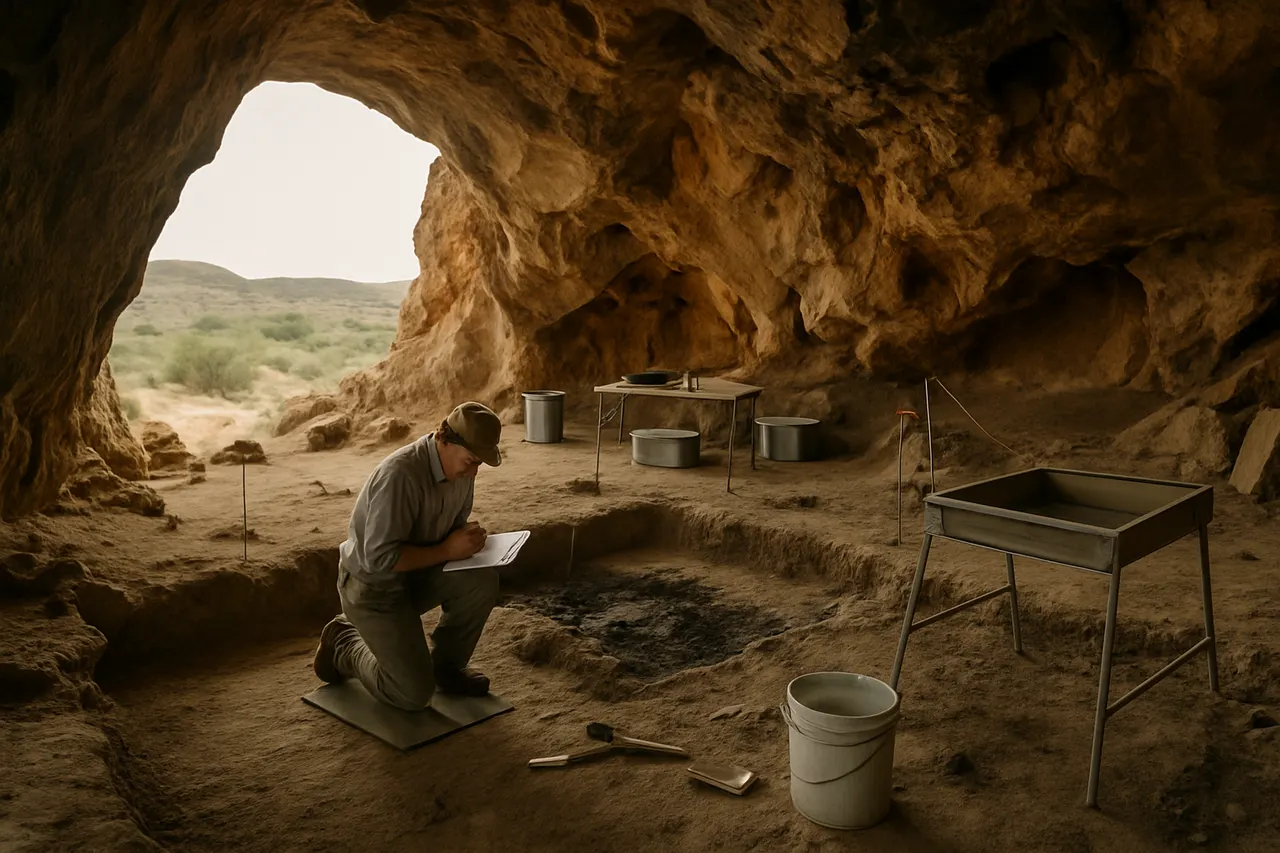
Researchers announced on June 24 that new findings from Wonderwerk Cave in South Africa's Kalahari Desert suggest early human ancestors were using fire as far back as 1.79 million years ago. This discovery pushes back the timeline for one of the earliest known records of fire use by hominins by hundreds of thousands of years.
Wonderwerk Cave, located roughly 90 miles from the Botswana border, had previously yielded evidence of intentional fire use dating to about 1 million years ago, reported in 2012. The recent study builds on these earlier findings using a newly developed technique capable of detecting signs of burning in fossilized bones.
Because the traces of fire were found deep inside the cave, far beyond the reach of natural wildfires, researchers suggest that early humans deliberately brought naturally occurring fire into the cave and maintained it. Early humans were not passive observers but actively engaged with fire, incorporating it into their lives for warmth, protection, light, and eventually cooking.
Liora Kolska Horwitz, co-director of the Wonderwerk Cave project and a researcher with the National Natural History Collections at the Hebrew University of Jerusalem, noted that evidence of ancient fires is typically "subtle and difficult to detect."
This discovery follows a similar breakthrough reported in 2025 at Barnham, England, where researchers uncovered evidence of deliberate fire-making dating to about 400,000 years ago.
Even so, determining when humans first began using fire remains one of archaeology's most challenging questions.
Sources
- Fox News Latest
- Hebrew University of Jerusalem press release
Loading comments.