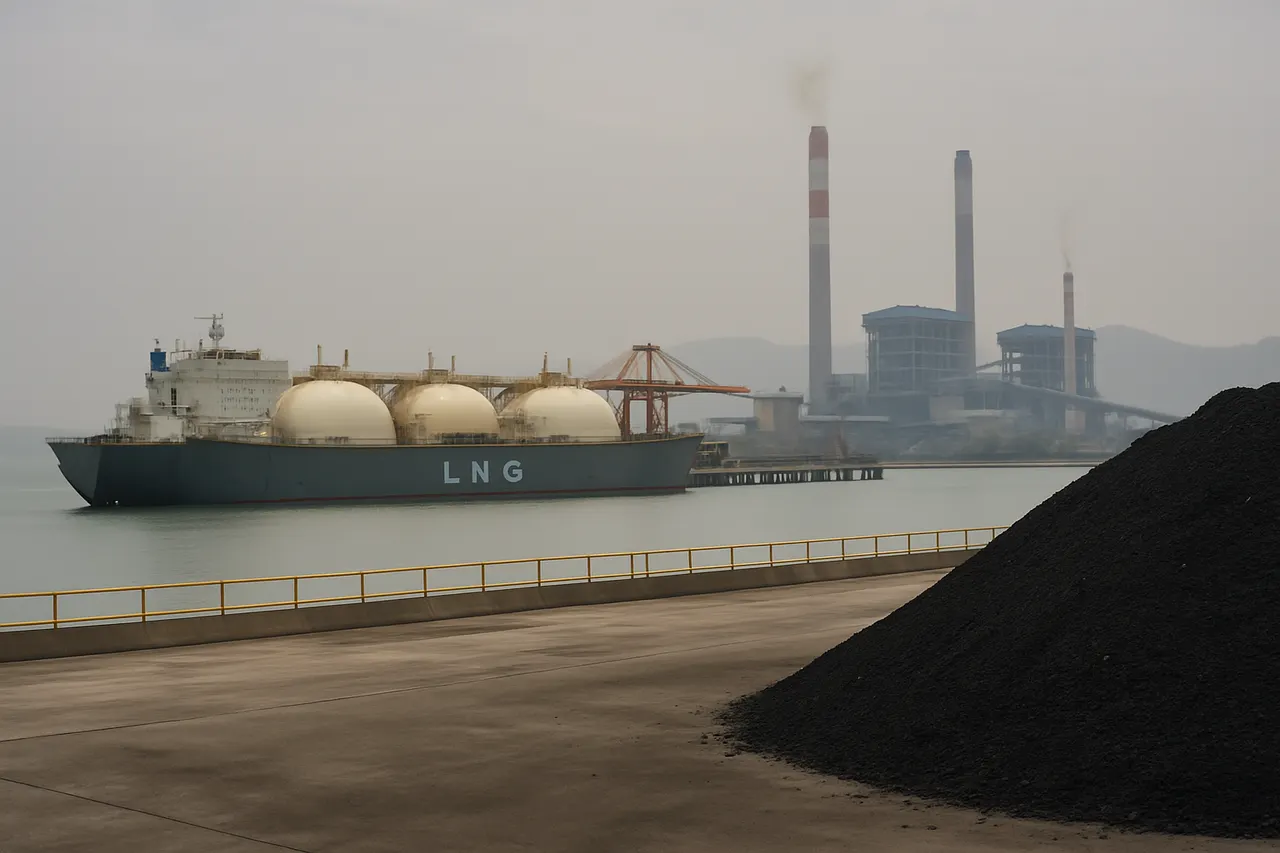
HANOI, July 8 — Vietnam's government announced on Wednesday that it is considering building additional coal-fired power plants to meet the country's growing energy demands. This move comes as the ongoing war involving Iran complicates the development of liquefied natural gas (LNG) facilities, a key part of Vietnam's energy strategy.
Vietnam, a Southeast Asian manufacturing hub, aims to expand its power generation capacity to support its fast-growing economy, focusing on renewables and LNG. However, the government stated that "in recent times, the unfolding conflicts in the Middle East have impacted the security of LNG supplies, creating a need to strengthen energy security."
The country had set a target to establish LNG-fired power plants with a combined capacity of 22.5 gigawatts by 2030 but has achieved only 7.3% of this goal, primarily due to regulatory challenges and limited investor interest, compounded by concerns over LNG supply security amid the Iran war.
Under the current plan, Vietnam aims for a total installed capacity between 183 and 236 gigawatts by 2030, with coal-fired plants accounting for 13.1% to 16.9% of the energy mix, and LNG for 9.5% to 12.3%. Electricity output in the first half of 2026 increased by 9.8% year-on-year to 171.5 billion kilowatt hours, with coal-fired power plants contributing 54.5% of this output, according to state utility EVN.
The government indicated it may adjust its national power plan to incorporate more coal-generated energy to ensure energy security.
Loading comments.