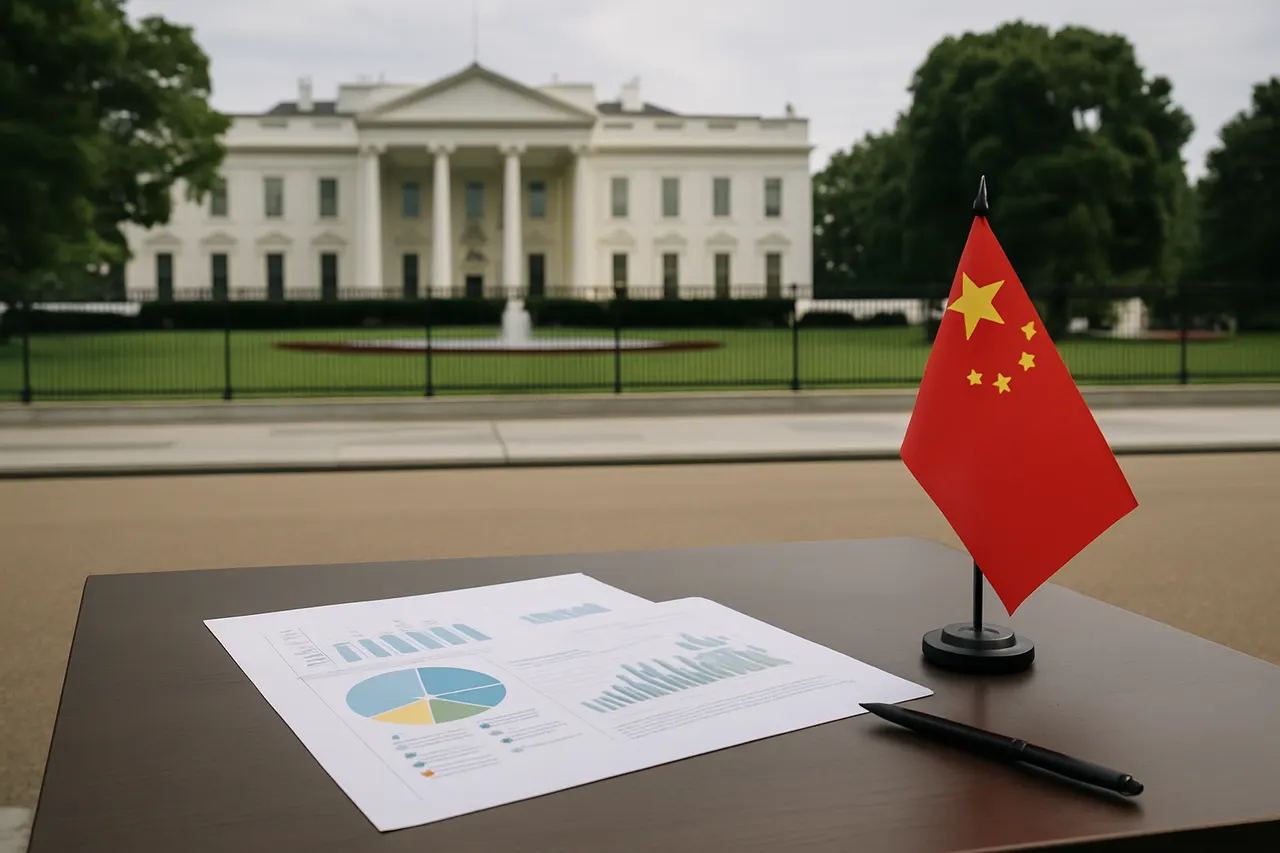
US President Donald Trump began criticizing China’s renewable energy achievements during a White House meeting with oil executives on January 9, a stance he later reinforced at the World Economic Forum. His narrative, which accuses China of clean-energy “overcapacity,” is described as shaped more by domestic political interests than by factual evidence.
Trump’s rhetoric, while potentially resonating with voters in the American Midwest, has been challenged for lacking scrutiny. His attacks aim to undermine European net-zero strategies, defend fossil fuels in the US, and portray China’s green industries as a strategic threat rather than a cooperative solution.
Contrary to Trump’s depiction of China’s wind sector as backward and export-focused, China has integrated energy security, pollution control, and industrial upgrading into its energy transition strategy for decades, predating President Xi Jinping’s 2060 carbon neutrality pledge.
Recent data shows China’s mainland grid-connected wind and solar capacity surpassed 1.84 billion kilowatts last year, overtaking coal for the first time and representing about 47% of total installed power capacity. Renewable energy sources accounted for more than 60% of China’s electricity generation capacity, underscoring the country’s significant role in the global clean-energy supply chain.
Sources note that Trump’s narrative does not withstand scrutiny and is more reflective of domestic political aims than the realities of China’s renewable energy progress.
Loading comments.