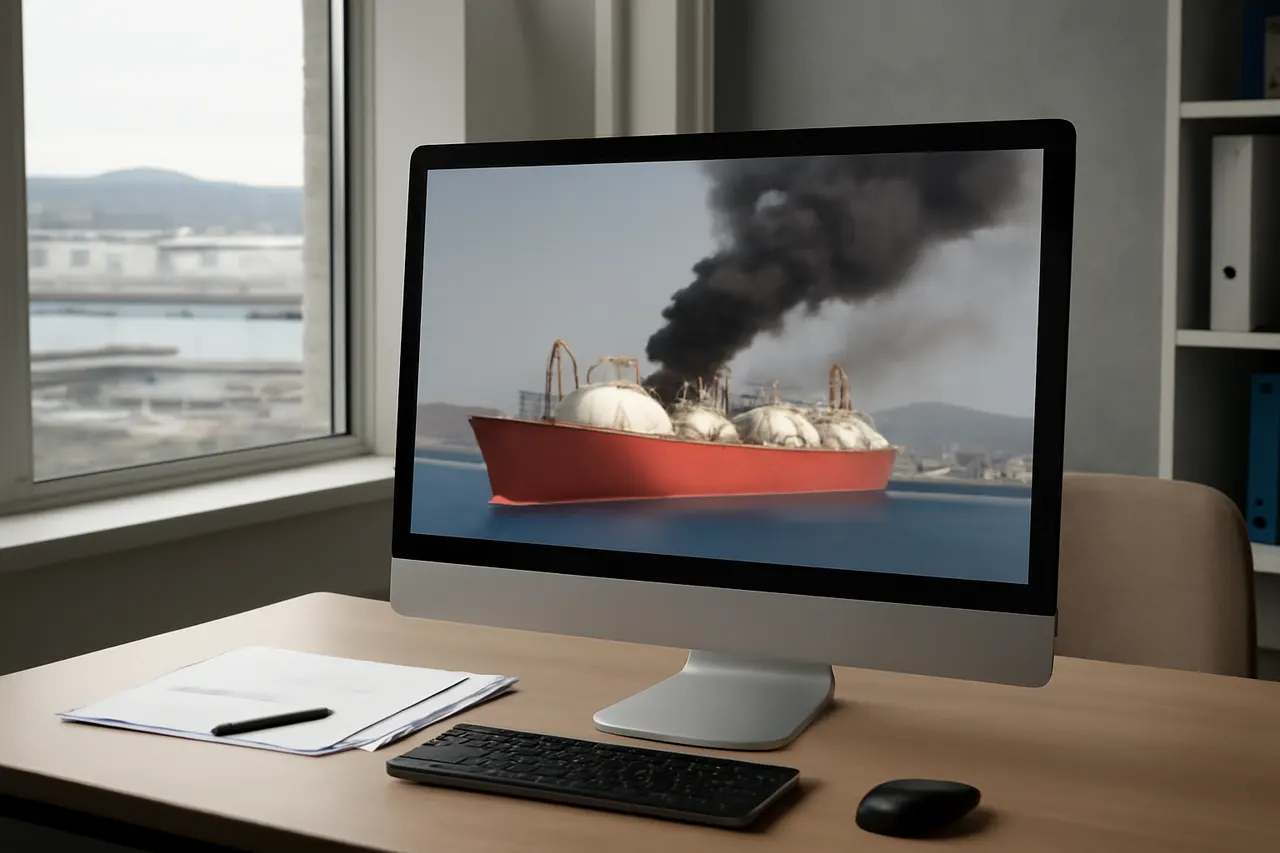
In the early hours of Tuesday, a distress call was received from the Al Rekayyat, a Qatari-owned liquified natural gas (LNG) tanker traveling toward the Strait of Hormuz. The captain, clearly panicked, reported an engine room fire with heavy smoke, though further damage assessment was not possible.
The tanker, carrying 216,000 cubic meters of LNG and bound for India, was navigating with transponders off to avoid detection by the Iranian Revolutionary Guard Corps amid ongoing regional conflict. This area has become a focal point of a looming global energy crisis as the conflict has driven gas prices sharply higher.
LNG prices in Asia have surged more than 60% since February, with European prices nearly 50% higher. The volatility of LNG, which is more unstable than crude oil, raises concerns about the potential for catastrophic incidents such as explosions.
While Saudi Arabia can transport oil via an overland pipeline to Red Sea ports, gas transport relies solely on shipping, increasing vulnerability to disruptions. The global refinery system is already struggling to manage backlogs, exacerbating supply challenges.
Experts warn that such incidents carry serious political repercussions. It has been noted that had certain policies been in place since 2021, Australia's inflation and Reserve Bank responses might have been less severe.
Most attention during the conflict has focused on oil and refined fuels, but the LNG market's instability now threatens industrial and household energy supplies across Asia and Europe.
Notable quotes:
- "Mayday, mayday, mayday. This is vessel Al Rekayyat, LNG vessel Al Rekayyat."
- "Status: engine room fire and full of smoke. Unable to assess further damage."
- "Doing that, there is no doubt that there would be very serious repercussions from a political point of view," an expert said.
- "Global refineries already couldn't process the backlog easily."
Loading comments.