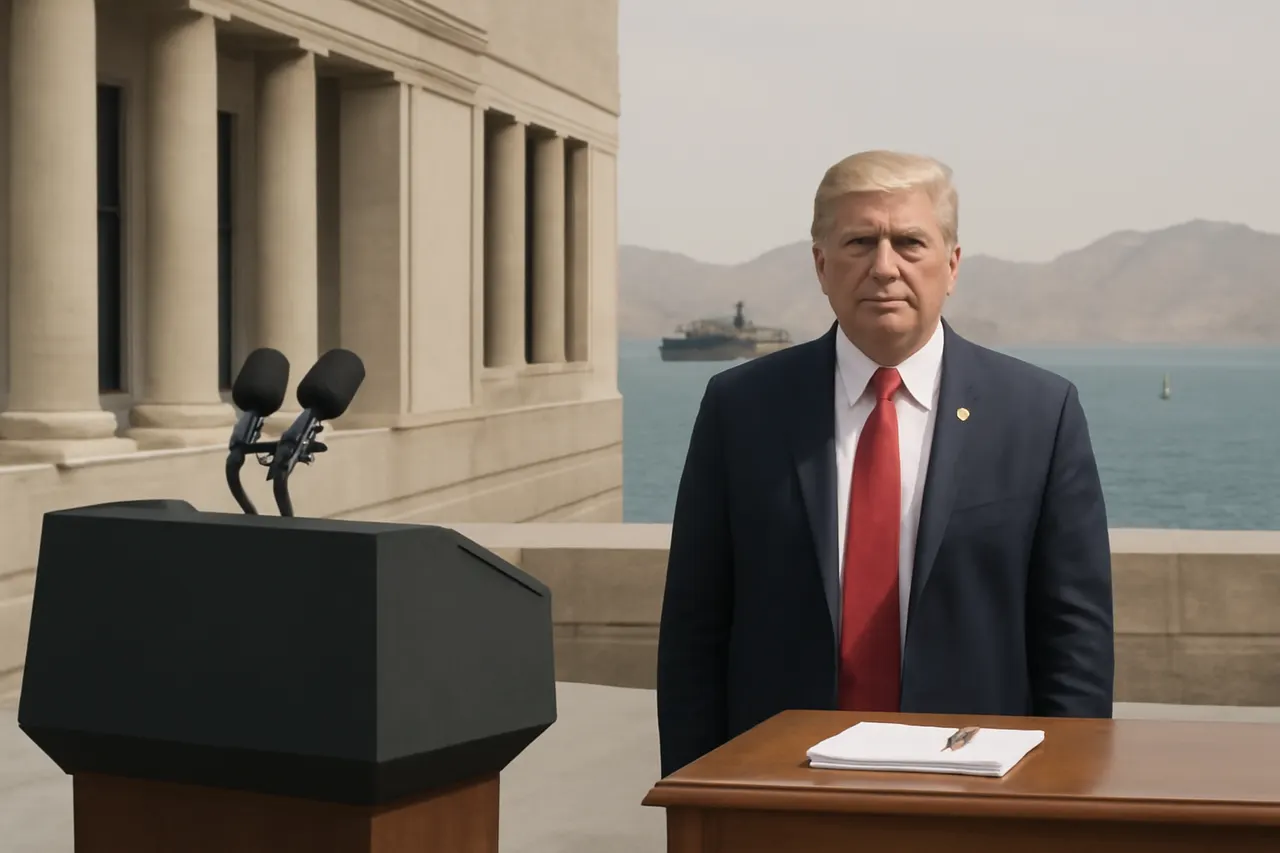
On Monday, July 14, 2026, President Donald Trump announced the reimposition of a naval blockade on Iranian ports along with new charges on commercial vessels transiting the Strait of Hormuz. This move effectively ends the preliminary peace deal with Iran that was signed just 26 days earlier at the Palace of Versailles.
Trump stated on his social media platform that while "all other countries will have fair and open use of the Strait," the United States would become "THE GUARDIAN OF THE HORMUZ STRAIT" and seek reimbursement of 20% of the cost of cargo shipped through the strategic waterway in exchange for providing safe passage. In an interview on Fox News, he emphasized, "We guarded the strait for 50 years and never got paid for it," adding that the U.S. wants to be reimbursed for the risks to its personnel.
The naval blockade's return comes amid escalating tensions and recent tit-for-tat strikes between the U.S. and Iran, with diplomatic efforts over the preceding weekend failing to de-escalate the situation. Officials familiar with internal discussions had privately acknowledged that the months-long negotiated deal was collapsing.
Earlier in the month, Trump had suggested in a New York Times interview that if a comprehensive nuclear deal with Iran failed, the U.S. could become "the guardian of the Middle East" in exchange for 20% of the region's revenues.
The International Maritime Agency (IMO), a United Nations body regulating maritime shipping, responded by stating it was "aware" of Trump's announcement and awaiting further details. The agency noted there is "no legal basis through which to introduce mandatory tolls simply to transit through a strait." Additional information for commercial mariners is expected to be provided through a formal notice.
Ships continue to sail near the Strait of Hormuz off the eastern coast of the United Arab Emirates at Khor Fakkan, highlighting the strategic importance of the waterway.
Sources
- ABC Top Stories
- Fox News interview with President Donald Trump
- Statement from the International Maritime Agency (IMO)
Loading comments.