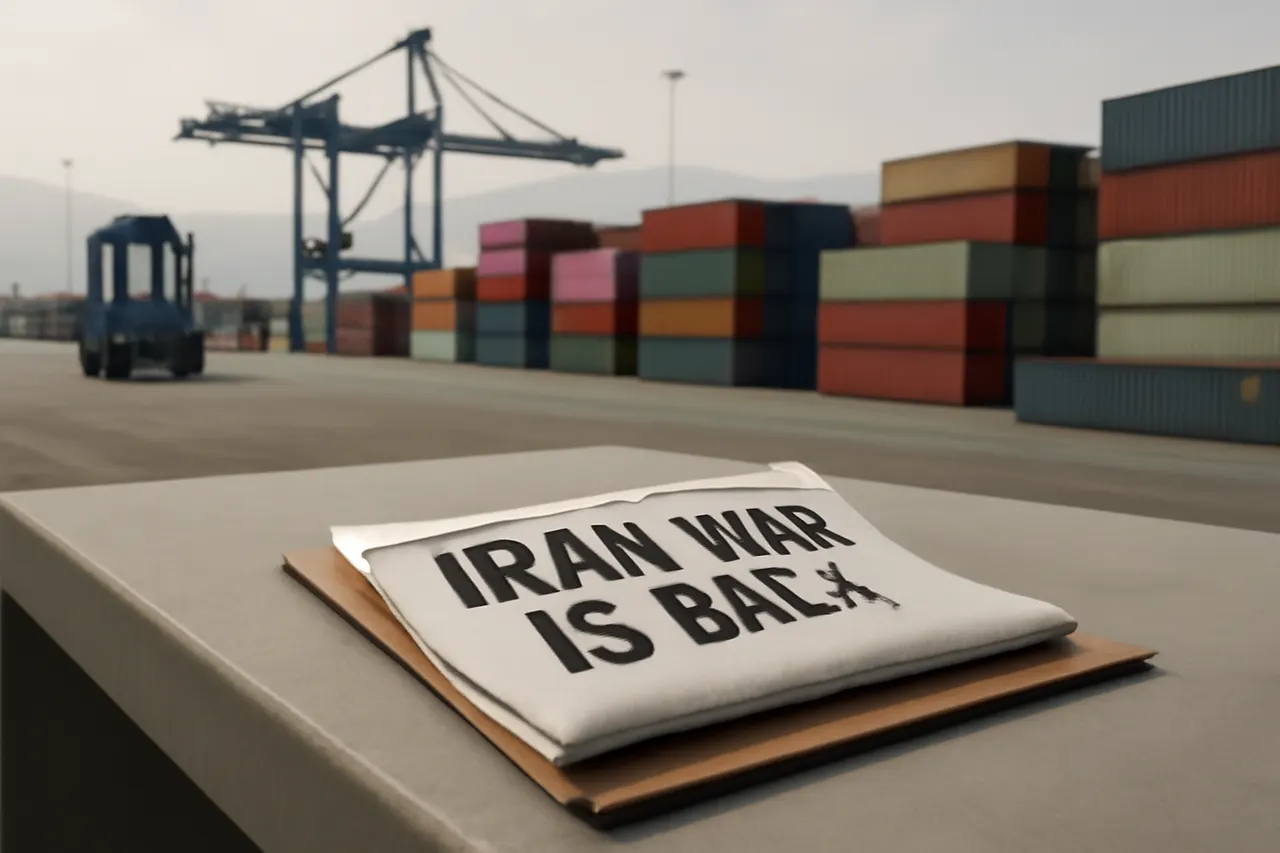
President Donald Trump declared the U.S.-Iran peace memorandum "over" on July 8, 2026, and shortly thereafter reinstated the U.S. naval blockade of Iran. Since this declaration, a gradually escalating air war has unfolded across the Middle East, killing at least four U.S. troops and at least 50 Iranians.
The conflict has extended beyond rural areas, with air raid sirens sounding in Jordanian cities for the first time in weeks after Iran attacked King Hussein International Airport in Aqaba on Sunday, July 19, 2026. Additionally, another American soldier died in Iraqi Kurdistan while handling a crashed Iranian drone.
Iranian military retaliation followed an alleged U.S. strike on a water plant in southern Iran, leading to consecutive bombings of water and electrical plants in Kuwait. Kuwaiti residents report that the intensity of air raids now surpasses that of the full-scale war in March 2026.
Shipping in the Strait of Hormuz, a critical maritime passage that the post-ceasefire U.S. campaign aimed to protect, has come to a halt after Iranian attacks killed several sailors. Iranian leaders re-closed the Strait of Hormuz, citing concerns over what they described as "a concerted effort to erode [Iranian] leverage" and anticipating another U.S.-Israeli attack, according to Iranian-American academic Vali Nasr writing in the Financial Times.
The original peace memorandum included a clause committing both sides to the "permanent termination of military operations on all fronts, including in Lebanon," and to "ensuring the territorial integrity and sovereignty of Lebanon." However, while Iran expected a full Israeli withdrawal from Lebanon, the U.S. secured Lebanese government approval for a prolonged Israeli campaign against the pro-Iran militia Hezbollah.
These developments mark a significant deterioration in U.S.-Iran relations and a resurgence of conflict in the region.
Loading comments.