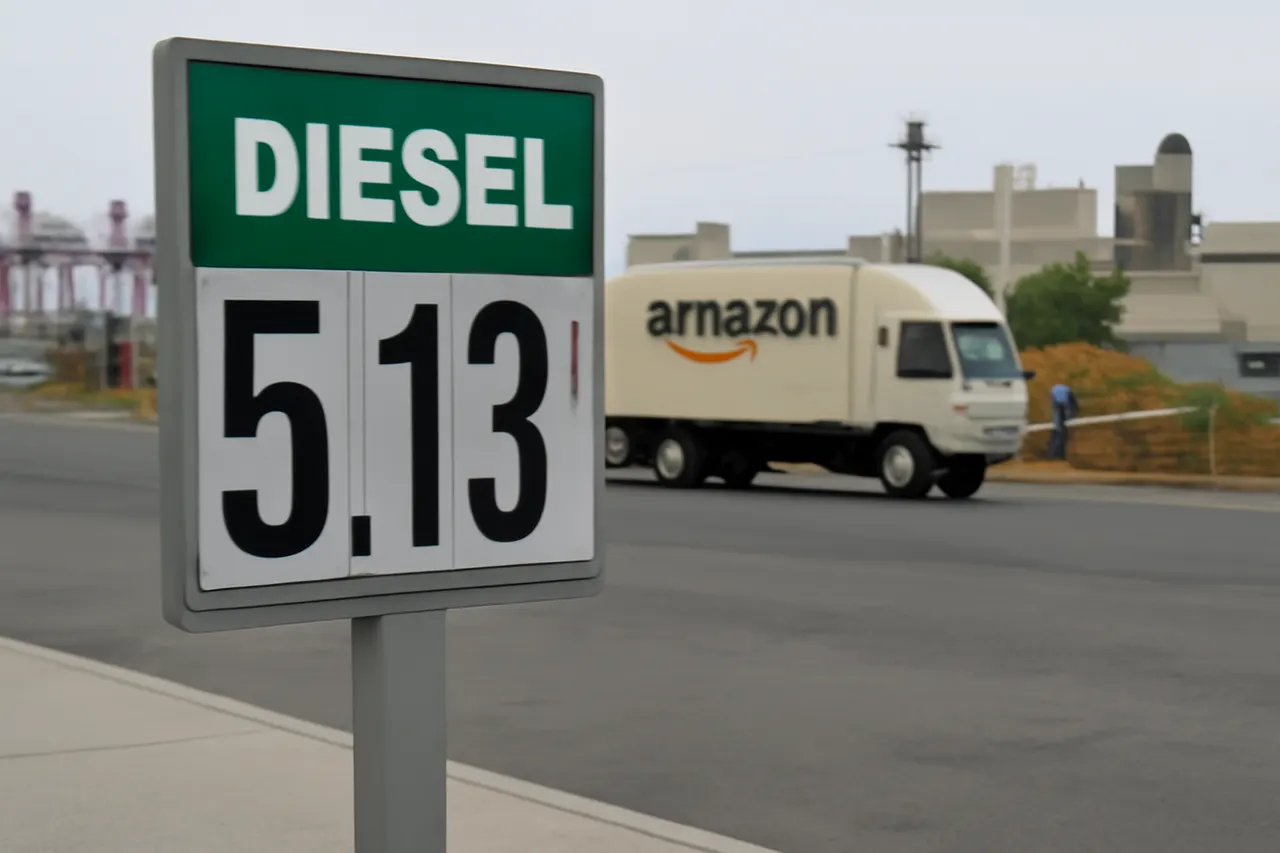
The ongoing conflict involving Iran has led to a significant rise in diesel prices in the United States, with costs climbing from an average of $3.56 per gallon in January 2025 to $5.13 per gallon as of July 2026. This surge is largely attributed to the closure of the Strait of Hormuz, a critical oil transit route, which has disrupted fuel markets.
Diesel, a key fuel powering trucks, farms, and the nation's freight network, plays a crucial role in transporting goods across the country. Unlike gasoline, which mainly affects motorists directly, diesel influences the cost of moving nearly every product, from groceries and Amazon packages to construction materials and new homes.
Economists warn that the rise in diesel prices is a major inflationary concern because it increases transportation costs for businesses, which often pass these costs onto consumers. This ripple effect threatens to raise prices on food, consumer goods, and housing materials, adding strain to household budgets.
"We all focus on gasoline because ultimately we're consumers and pump prices are very visible. But what we don't think about is the price of diesel, which is the workhorse fuel for the U.S. economy and especially for key sectors," explained an expert cited by Fox News.
The food industry exemplifies diesel's pervasive impact: it powers irrigation pumps, tractors in the fields, and trucks that deliver food from farms to grocery stores, making diesel integral to every stage of food production.
Additionally, refineries do not process crude oil instantaneously, meaning that supply chain adjustments to price changes can lag, prolonging the economic impact.
According to Department of Energy data, a fully loaded semi-truck typically gets just 6 to 7 miles per gallon of diesel, underscoring the fuel's critical role in freight transportation.
This development highlights diesel as a key barometer for whether geopolitical turmoil, such as the Iran conflict, will extend beyond energy markets to affect the broader U.S. economy.
Loading comments.