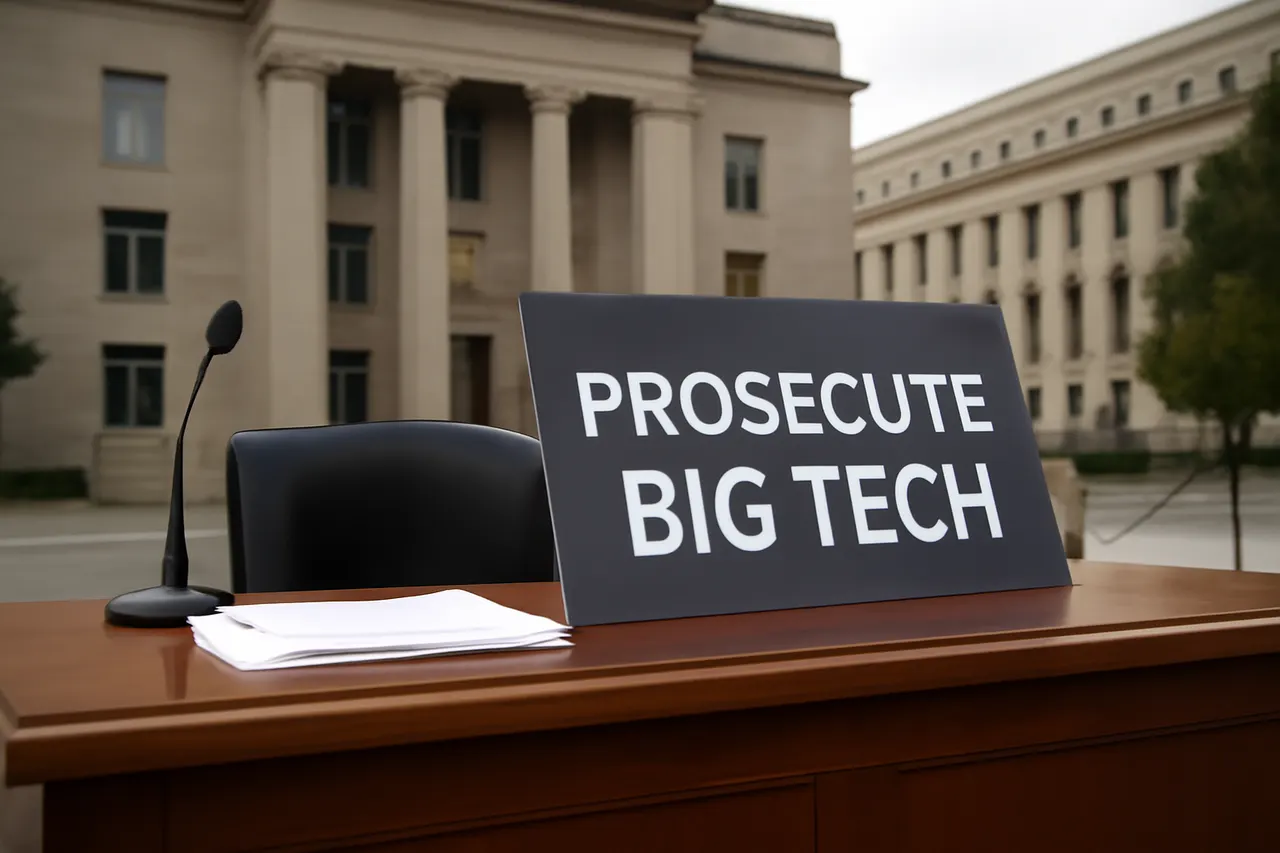
President Donald Trump has nominated Adam Candeub, currently general counsel for the Federal Communications Commission, to lead antitrust enforcement at the Department of Justice (DOJ). Candeub has recently authored a report advocating for the criminalization of pornography as a means to protect marriage and promote human flourishing. He calls on society to emulate earlier generations that took "measures to curb access to [sexual material] so that sexual desire could be channeled more easily into marriage."
Candeub also criticizes 20th-century judges who "imagined they had a moral duty to protect James Joyce's Ulysses," signaling his intent to take obscenity regulation further. His views include restoring obscenity regulation adapted for the internet age and supporting speech restrictions that further public morality.
In a chapter of the Heritage Foundation's Project 2025, Candeub suggests that social media's effect on users' happiness should be considered when evaluating whether these platforms violate antitrust laws. This nomination signals a continuation of aggressive antitrust scrutiny of big tech companies.
Historically, New York's 1866 Obscene Literature Act criminalized the sale or distribution of "obscene and indecent" materials, using the Hicklin standard to determine obscenity based on whether content would "deprave and corrupt those whose minds are open to such immoral influences." Courts applied this standard in cases involving works like Theodore Dreiser's An American Tragedy.
Efforts to regulate online content on grounds of combating pornography, sex work, or sexual exploitation have often served as precedents for broader restrictions on online speech and privacy.
Additionally, legislative proposals such as the NO FAKES Act, which would impose new restrictions on AI deepfakes, and the Apps Store Accountability Act, requiring parental consent for minors downloading apps, are reportedly under consideration in related policy discussions.
For context, despite nostalgic views of past eras, data from 1968 shows children under six watched an average of 54 hours of television weekly, indicating significant media exposure even then.
Sources
- Reason, Elizabeth Nolan Brown, Trump's New DOJ Nominee Wants To Ban Online Porn and Prosecute Big Tech
Loading comments.