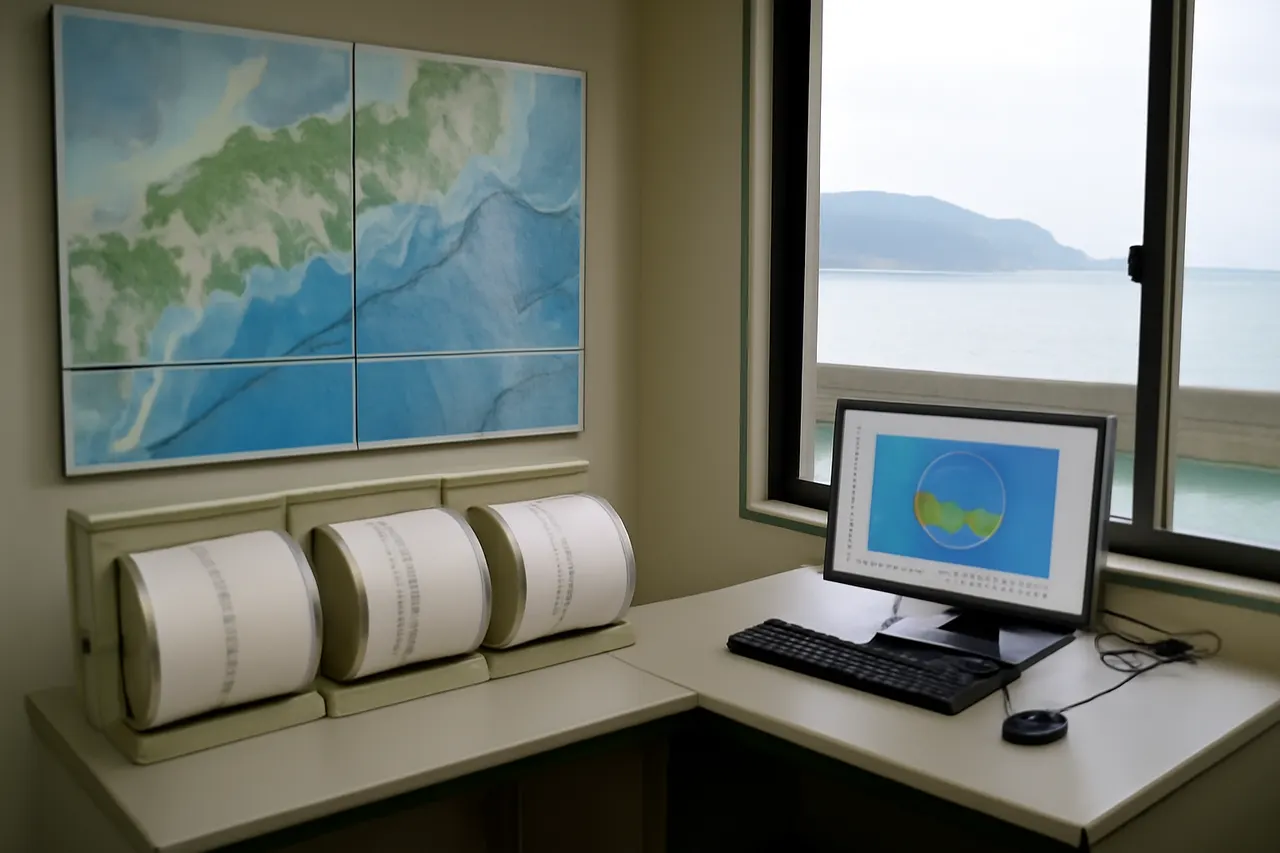
A recent Japanese study has found that the locked zone in the Nankai Trough, a 900km (560-mile) long fault line off Japan’s Pacific coast, is not permanent but changes over time. This discovery complicates the prediction of megaquakes along the fault line, where the Philippine tectonic plate slips beneath the Eurasian plate.
Locked zones are areas where tectonic plates merge and movement is impeded, allowing stress to build up until it is released in an earthquake. The Philippine plate is slipping under the Eurasian plate at a rate of 4-6cm (1.6-2.4 inches) per year, according to a report of the study by The Mainichi newspaper.
Earthquakes occur when these plates lock and pressure accumulates. If the immense energy stored in these locked zones is suddenly released, it could trigger megaquakes, which pose significant risks of shaking and tsunamis.
The study, conducted by a team from the University of Tokyo’s Institute of Industrial Science and the Japanese coastguard, analyzed crustal deformation data from 2013 to 2023. Their findings indicate that while some areas of the fault remain continuously locked, others exhibit more fluid behavior, shifting over time.
This variability in locked zones presents new challenges for seismic forecasting and disaster preparedness in the region.
Loading comments.