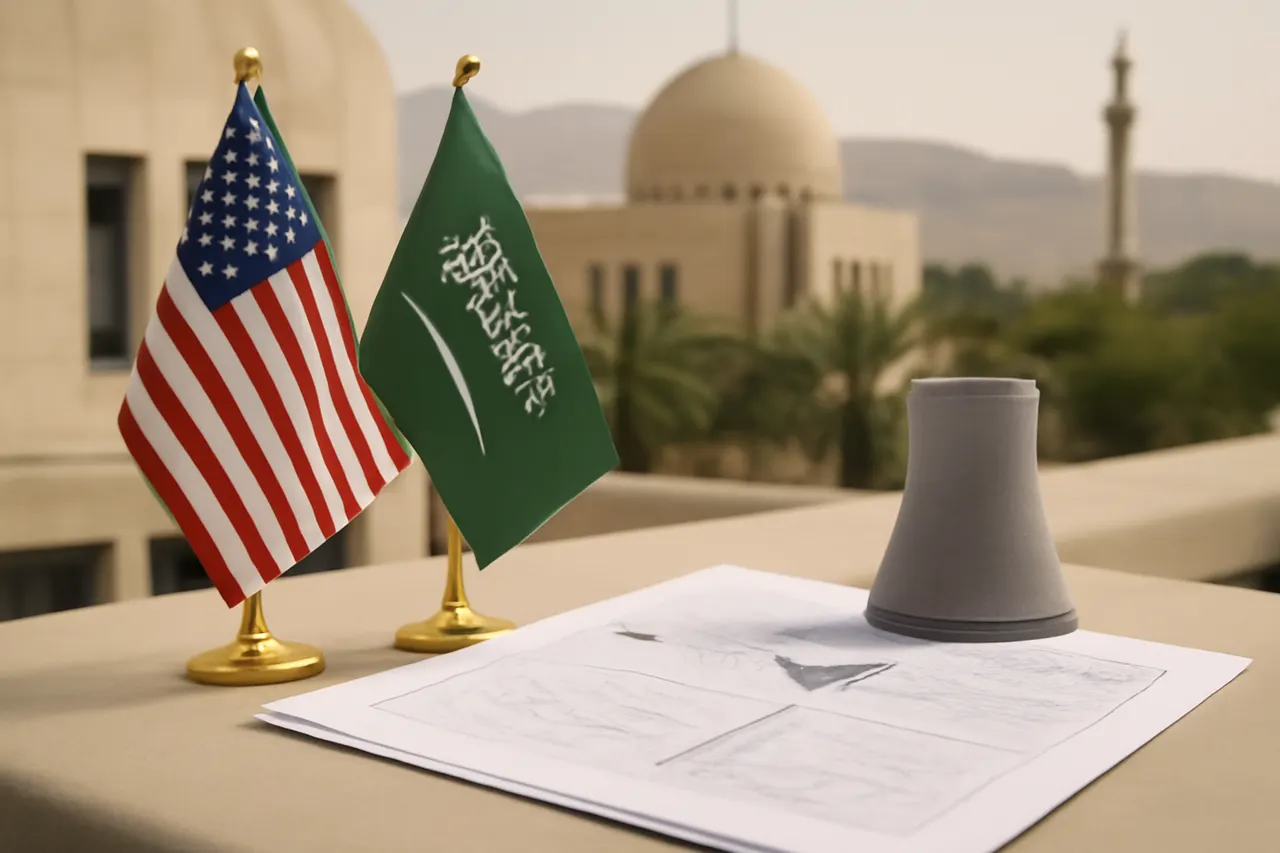
On Wednesday, United States President Donald Trump agreed to a 30-year nuclear deal with Saudi Arabia that would involve transferring nuclear technology to the Gulf kingdom. The agreement has sparked concerns that it could trigger a nuclear arms race in the Middle East, especially given reports that Riyadh may be allowed to enrich its own uranium—a key step toward developing nuclear weapons.
Saudi Arabia has long expressed its intention to use nuclear energy for power generation. However, in 2018, de facto leader Mohammad bin Salman told CBS that Riyadh would “without a doubt” develop a nuclear weapon if Iran did the same. This stance underscores the regional tensions surrounding nuclear proliferation.
Former Israeli Defence Minister Avigdor Liberman publicly opposed the deal, stating on X that Israel must oppose it with “all our might.” Experts also warn that the deal appears less rigorous than similar agreements, potentially complicating regional security dynamics. James Dorsey, a regional expert at Singapore's Rajaratnam School of International Studies, noted that the agreement, combined with other US actions such as the potential sale of F-35 fighter jets to Turkey, exacerbates existing tensions between the US and Israel over Iran and territorial issues in Lebanon and Syria.
Trump later added that the deal's progress depends on Saudi Arabia normalizing diplomatic relations with Israel, a condition complicated by Saudi Arabia's insistence on Israeli moves toward establishing a Palestinian state—an outcome currently unlikely with the existing Israeli government.
Additional concerns include the possibility that Saudi Arabia could leverage its nuclear program to extract future concessions from Washington, including enhanced military protection, by threatening to weaponize its nuclear capabilities.
The deal still requires approval by the US Congress amid backlash from critics worried about destabilizing effects in the region. Meanwhile, China and Russia have submitted bids to build nuclear plants in Saudi Arabia, often with fewer conditions, adding another layer of complexity to the kingdom's nuclear ambitions.
Experts caution that every military nuclear program begins with a civilian one, and the US-Saudi deal's terms may allow Saudi Arabia to renegotiate if neighboring countries secure more flexible agreements.
Loading comments.