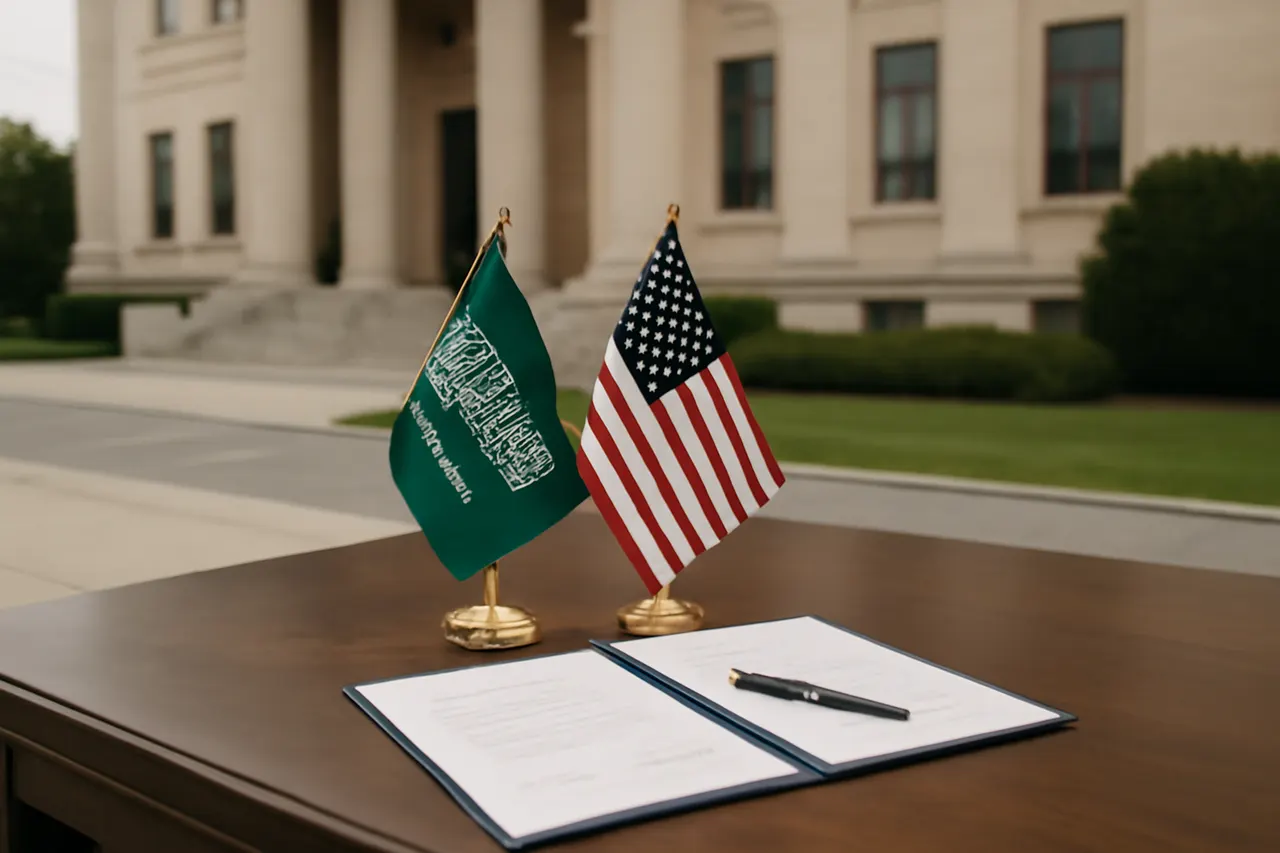
On Wednesday, July 23rd, 2026, the United States and Saudi Arabia formalized a nuclear cooperation agreement that may permit Saudi Arabia to enrich uranium for civilian purposes. Energy Secretary Chris Wright and Saudi Minister of Energy Abdulaziz bin Salman signed the so-called “123 agreement” along with a bilateral safeguards agreement described by the Trump administration.
While details remain limited, the framework reportedly allows for the construction of a uranium enrichment facility in Saudi Arabia following a joint U.S.-Saudi study, according to an anonymous source familiar with the matter. Saudi Arabia's Energy Ministry stated the agreement supports efforts to diversify energy sources, advance technology, and expand bilateral cooperation and investment.
Energy Secretary Wright emphasized the agreements reflect a shared commitment to strengthening commercial relations and ensuring security, asserting they uphold the highest standards of nuclear safety and nonproliferation using U.S.-designed technology and expertise.
However, the deal does not include the International Atomic Energy Agency's Additional Protocol, which would provide enhanced monitoring and verification. This omission has drawn criticism, with experts like Bollfrass highlighting that the U.S. is not requiring Saudi Arabia to adhere to the highest internationally monitored safeguards, potentially transferring sensitive technology with less oversight.
Secretary of State Marco Rubio, speaking from the Philippines, addressed proliferation concerns by stating, “The U.S. is not going to reach any agreement with any country in the world that leads to the risk of proliferation.”
Adding to regional tensions, Pakistan’s defense minister declared that Pakistan’s nuclear program could be made available to Saudi Arabia if necessary, a statement interpreted as a warning to Israel, widely regarded as the Middle East’s sole nuclear-armed state.
Loading comments.