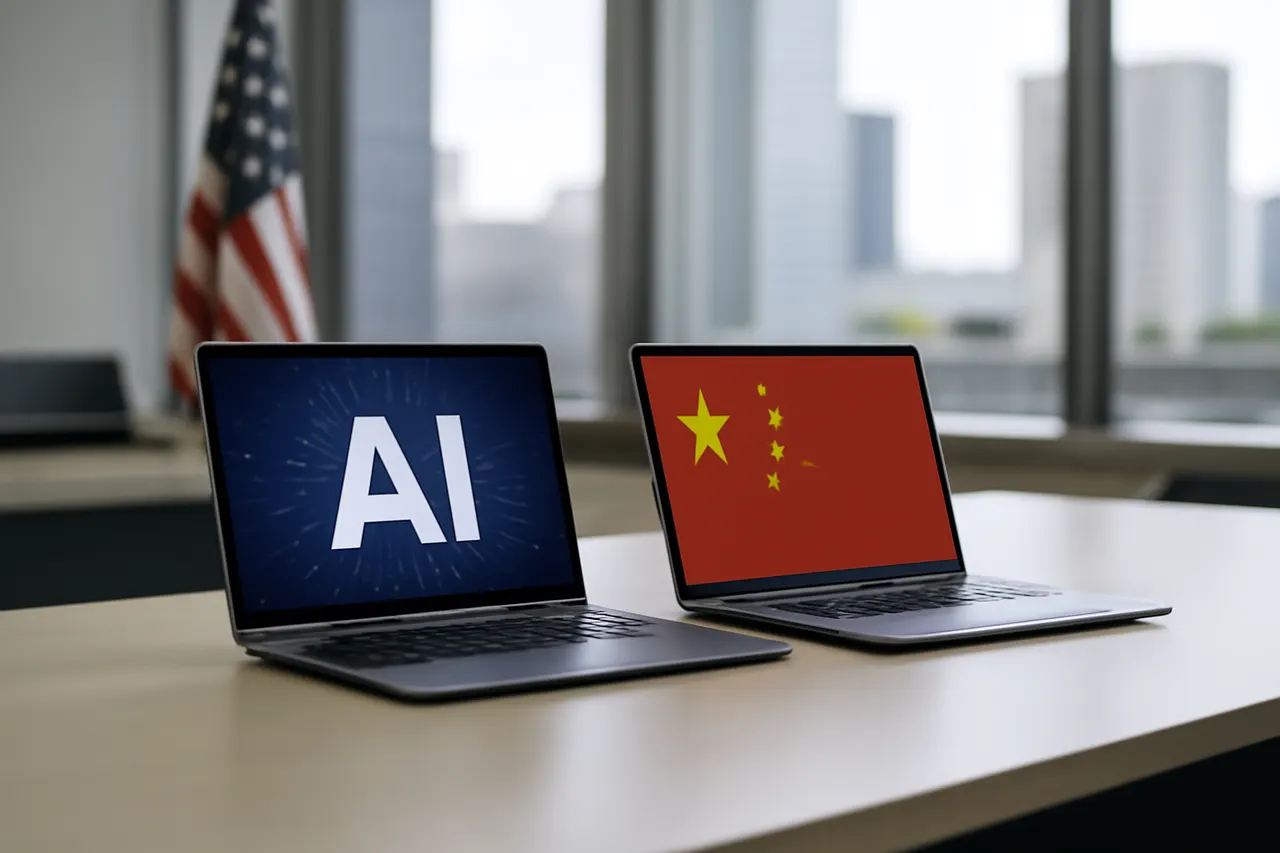
China has dramatically closed the gap with the United States in advanced artificial intelligence (AI), shrinking a previous five-year lead to just a few months. While US companies like Anthropic and OpenAI have invested hundreds of billions of dollars to advance AI, Chinese firms have focused on developing numerous open-source AI models using "good enough" technology amid US restrictions on high-end chips.
Chinese platforms such as DeepSeek, Alibaba's Qwen, and Xiaomi's MiMo are now widely used in business, government, and consumer devices across China. Recently, Chinese startup Moonshot AI unveiled Kimi K3, a model that rivals Anthropic's Claude Fable 5, one of the most advanced US AI models, on key benchmarks. In some tests, Kimi K3 matches or surpasses Claude while requiring far less computing power and costing a fraction of the price.
"For 98% of customers, the 1 to 2% difference [in knowledge] isn't worth paying 10 to 20 times more," the report noted. Moonshot AI and DeepSeek are also preparing to go public, with Moonshot AI planning a Hong Kong listing before early 2027.
US institutional investors have quietly increased their allocations to Chinese tech, seeing it as undervalued and betting they can avoid a potential US AI bubble while capitalizing on China's rapid progress in this competitive field. "The Chinese are building comparable models for 1/10th the cost and priced at 1/10 of US frontier," the analysis stated.
Beijing has rejected US accusations of intellectual property theft and dismissed threats of sanctions and model bans as baseless. Experts caution that while test scores for models like Kimi K3 are impressive, the actual learning depth may not be fully reflected, and open-source collaboration has helped Chinese labs improve their models.
This intensifying rivalry raises questions about future tensions between the US and China in AI development.
Sources
- Deutsche Welle: US-China AI rivalry heats up as Chinese models gain ground
Loading comments.