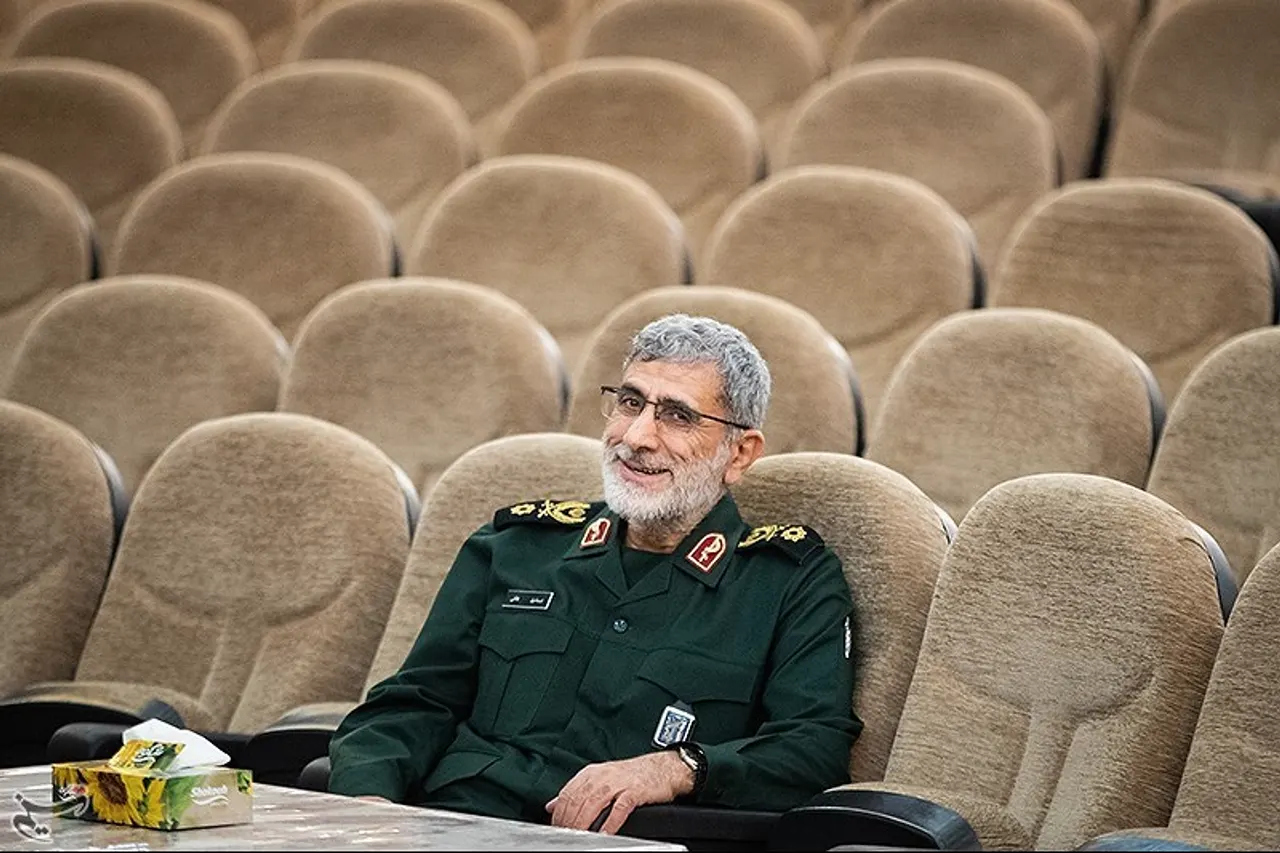

Esmail Qaani, head of Iran’s Islamic Revolutionary Guard Corps (IRGC) Quds Force, made an unannounced visit to Baghdad earlier this week to discuss the Iraqi government’s plan to disarm armed groups and centralize weapons under state control, an Iraqi source within the Coordination Framework—a coalition of Shia Iraqi parties—told Al Jazeera.
According to the source, Qaani held confidential meetings on Monday with Iraqi political and security leaders, as well as commanders of Shia paramilitary groups. The source said Tehran, through Qaani, conveyed a message opposing the immediate handing over of weapons by these factions, warning that Iran anticipates the possibility of a new round of conflict.
“The Iranian message stressed finding a political compromise instead of sliding into confrontation between the government and the armed factions that refuse to hand over their weapons,” the source added, noting that Iraqi political parties oppose using force to enforce the disarmament plan.
Iraqi Prime Minister Ali al-Zaidi faces a growing political and security crisis as the September 30 deadline to restrict all weapons to state control approaches. He informed parliament of his government’s eagerness to implement a 2024 agreement with the United States-led coalition to end its combat mission in Iraq by the end of September.
The disarmament push and Baghdad’s relations with Tehran were key topics during al-Zaidi’s visit to the US last month, his first foreign trip since assuming office in May. Meanwhile, Ammar al-Hakim, head of the Hikma Movement, is reportedly leading efforts to de-escalate tensions and persuade armed factions to comply with the weapons restriction ahead of the deadline.
Separately, the US Central Command announced that on July 28 it conducted joint attacks with Saudi Arabia against Iran-aligned militants that the IRGC had directed to target US forces and Saudi energy infrastructure.
Loading comments.