_not_in_education,_employment_or_training_(%25)(Female).png)
A new report released on Tuesday, August 11th, 2026, by the United Nations’ International Labour Organization (ILO) reveals that global youth unemployment, which had improved after the COVID-19 pandemic, is now worsening again. After reaching a two-decade low in 2023, youth unemployment for those aged 15 to 24 rose to 12.4% in 2025, leaving 67 million young people jobless worldwide.
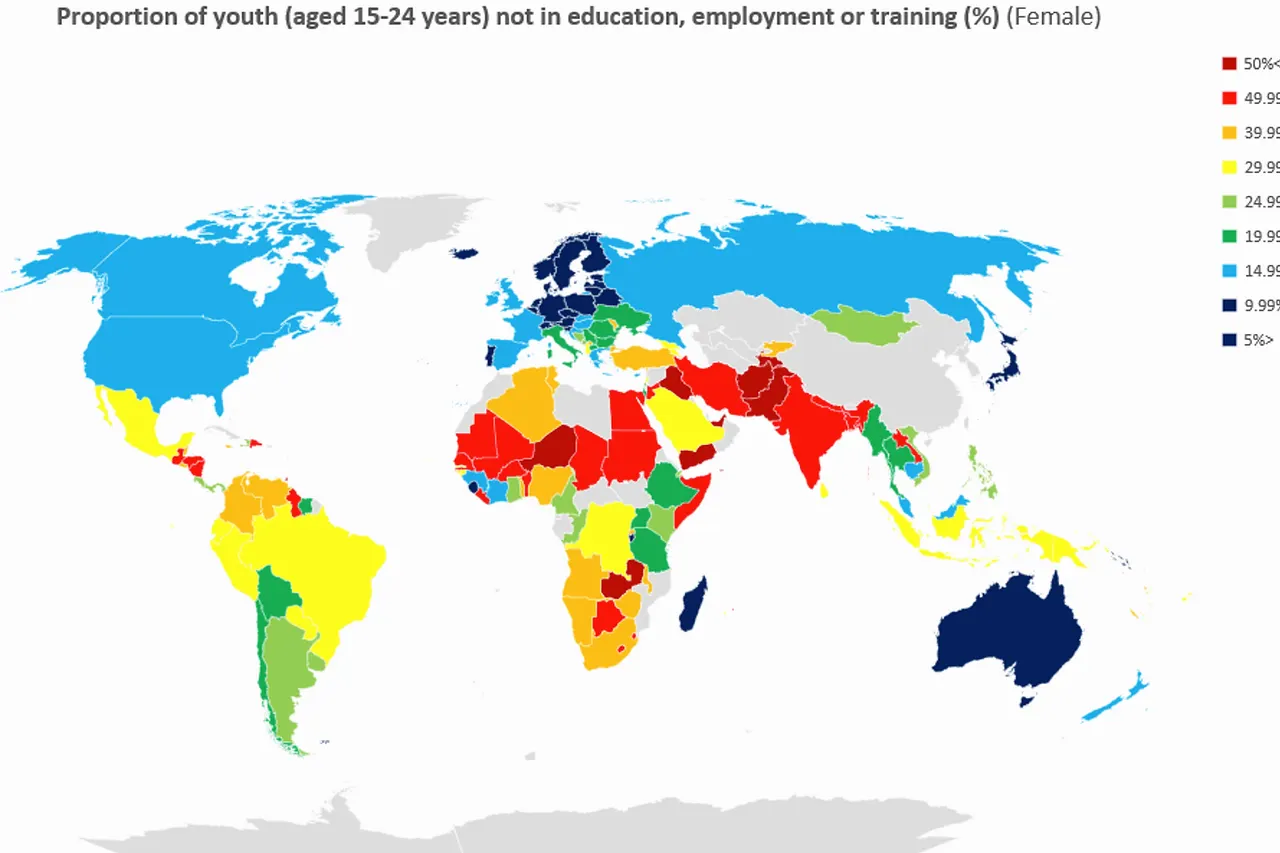
The share of young people not in employment, education, or training (NEET) also increased from 19.7% in 2023 to 20% in 2025, totaling 257 million globally. NEET status indicates disengagement from the labor market, which is difficult to reverse.
Youth unemployment either worsened or remained flat in eight of 11 global subregions between 2023 and 2025. In 105 countries, youth unemployment rose, compared to 58 countries where it declined. The highest youth unemployment rates continue to be recorded in the Arab States and North Africa at 26.2% and 22.6%, respectively. North America saw the most pronounced increase, with rates climbing from 8.3% to 9.8%.
ILO Director-General Gilbert F. Houngbo emphasized the societal impact, stating, “A generation that cannot find decent work cannot build its future with confidence. When young people are locked out of quality employment, countries lose talent, productivity and social cohesion.”
Sukti Dasgupta, ILO Director of the Employment, Skills and Sustainable Enterprises Department, highlighted the role of technology, including artificial intelligence, saying, “Technological progress, including AI, must work for young people, not against them.”
Loading comments.