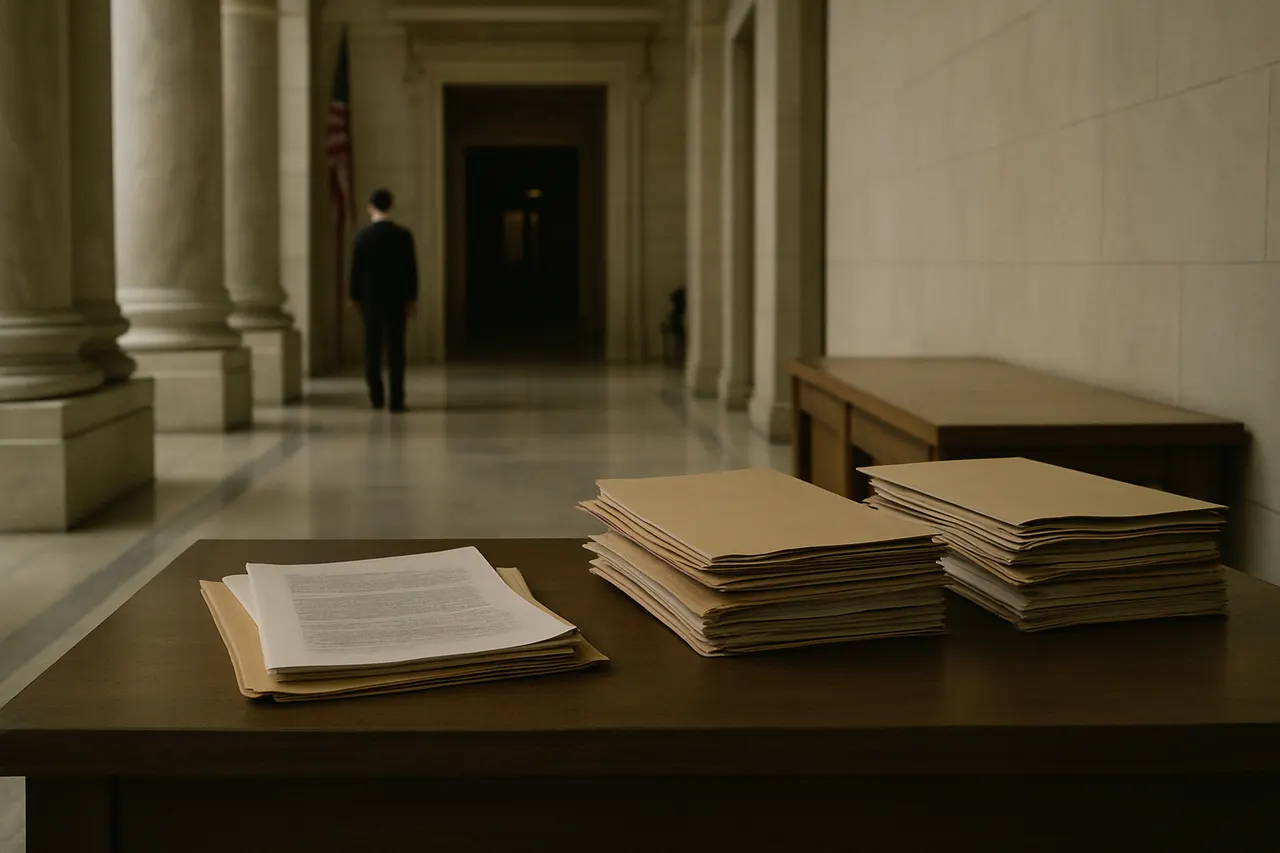
The Supreme Court convened on June 30, 2026, to address the complex issue of federal agencies' independence, particularly in light of President Donald Trump’s expanded authority over them. The Court focused on the Federal Trade Commission (FTC), an agency established in 1914 that wields extensive rulemaking, enforcement, and adjudicatory powers under more than 80 statutes.
Justice George Sutherland stated that FTC commissioners are not "purely executive officers," but rather the FTC exercises predominantly quasi-judicial and quasi-legislative functions. This distinction underpinned the Court's ruling that Congress cannot restrict the president’s power to remove agency officials, allowing President Trump to dismiss FTC Commissioner Rebecca Slaughter without citing the statutory reasons of "inefficiency, neglect of duty, or malfeasance in office."
The decision resolves a long-standing question about the separation of powers concerning agencies that blend legislative, executive, and judicial roles. While the Court acknowledged the challenges posed by such agencies, it also emphasized that it has "no shortage of tools" to enforce constitutional boundaries. Justice Neil Gorsuch highlighted doctrines related to Article III, the Due Process Clause, and the Seventh Amendment as mechanisms to ensure that adjudications of private rights occur before independent judges and juries.
Potential judicial tools to constrain federal agencies include the nondelegation doctrine, the major questions doctrine, and statutory interpretation without the deference previously granted to agencies, a practice the Court repudiated in 2024. These measures could serve to check executive overreach even without new congressional legislation.
The Supreme Court’s engagement with this issue reflects ongoing concerns about the balance of power among the branches of government and the role of administrative agencies within that framework.
Loading comments.