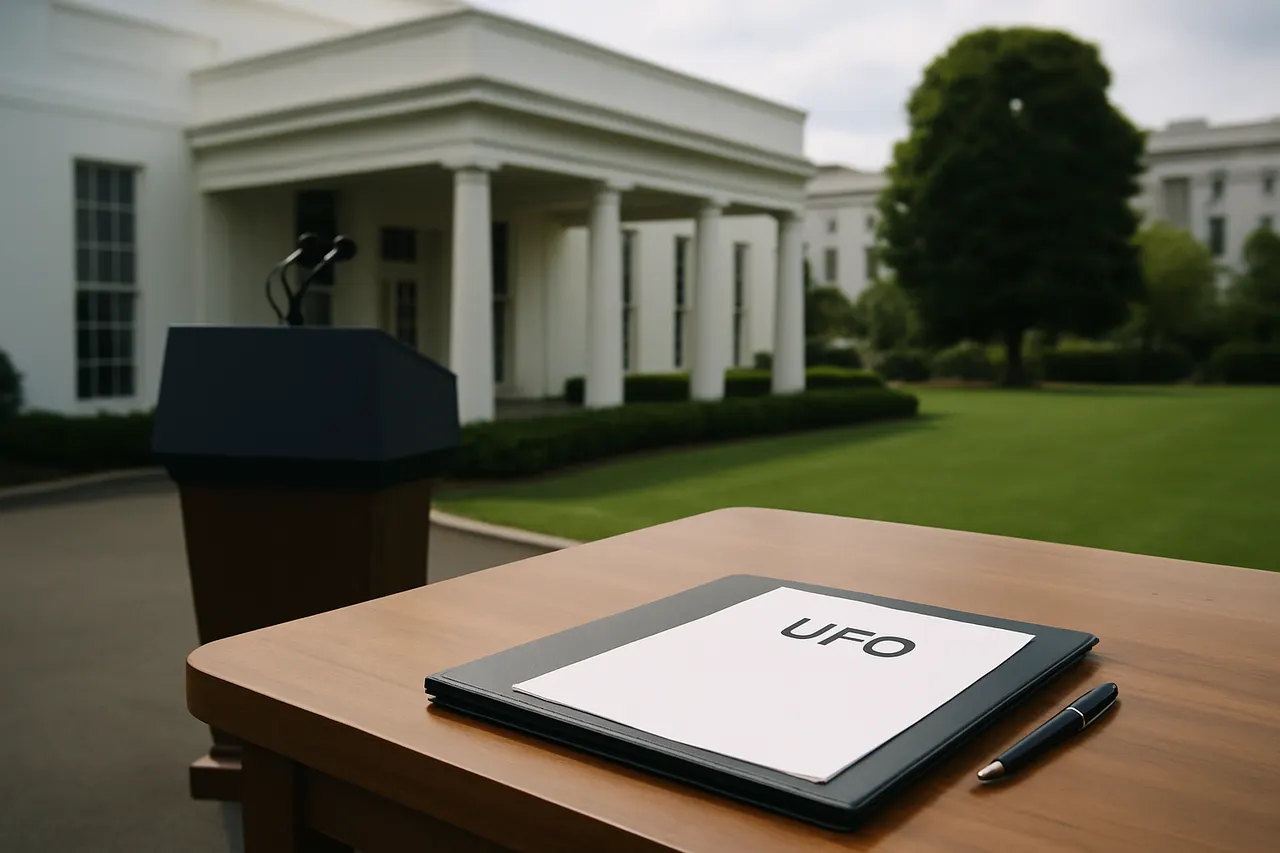
Avi Loeb, a Harvard University cosmologist who studied black holes and served as head of Harvard's astronomy department until 2020, has been appointed to lead a new White House scientific advisory council focused on investigating the origins of mysterious orbs and other objects reported by military personnel in recent years.
This appointment is part of former President Donald Trump's initiative to declassify more information related to unidentified anomalous phenomena (UAP), commonly known as UFOs. Loeb's team will report to a White House panel dedicated to the study of these phenomena.
Loeb expressed enthusiasm about the role and the potential for groundbreaking discoveries. He told CBS Boston, "If they were sure, confident that these objects are human-made, they would file these cases as classified reports within the Pentagon, within the intelligence agencies. The fact that they open up to the scientific community implies that there is a chance that perhaps one or more of these objects might be not human-made, in which case it would be the biggest discovery ever made by humanity with huge implications for the future."
Last year, Loeb suggested that the interstellar comet 3I/ATLAS could have alien origins, a theory that has drawn both attention and criticism.
However, some in the scientific community have expressed skepticism about Loeb's methods and conclusions. Steve Desch, an astrophysicist at Arizona State University, criticized Loeb for using flawed methods to reach what he called "wild conclusions about alien life," noting that Loeb avoids more established scientific approaches to searching for extraterrestrial life.
Sean Kirkpatrick, a physicist who previously investigated UAP at the Pentagon's All-domain Anomaly Resolution Office, stated that Loeb is "not viewed favorably" in the scientific community and lacks national security experience.
Following their first meeting last month, Loeb's team requested more than 50 videos, images, and other documents related to known UAP incidents from the Pentagon.
The appointment and the council's work highlight ongoing government efforts to better understand UAPs and their potential national security implications.
Sources
- CBS Politics
- CBS Boston interview with Avi Loeb
Loading comments.