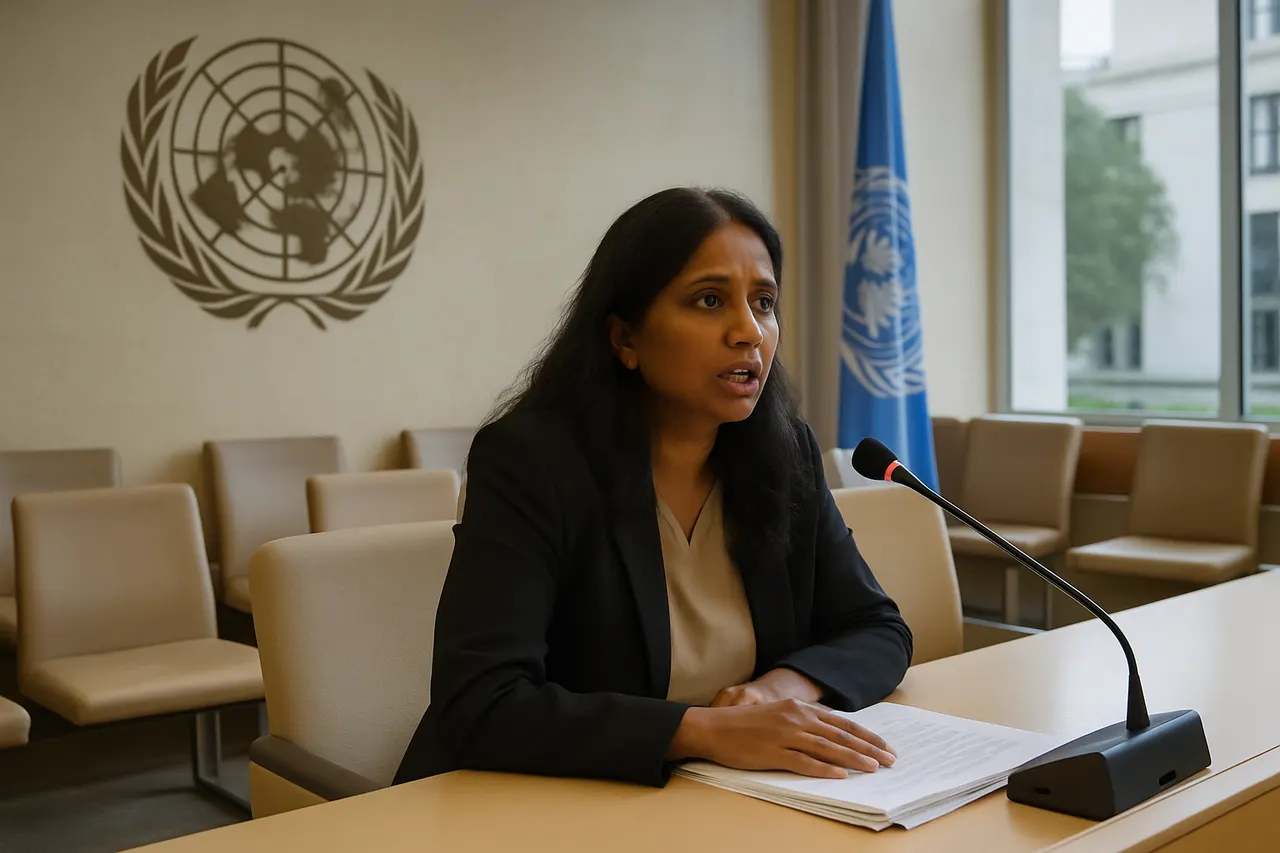
A recent report presented to the Human Rights Council by Ashwini K.P., the UN-appointed independent expert on racism, has found that racism significantly affects who can participate in sports globally. Despite sports' potential to promote diversity and inclusion, racial and ethnic minorities remain underrepresented at many levels, including governance and elite competition.
The report highlights persistent stereotypes influencing athlete identification, training, selection, and perception, contributing to the underrepresentation of marginalized groups such as minorities, caste-oppressed communities, and other racialized populations.
Economic barriers like high participation costs, limited access to facilities, coaching, travel, and nutrition disproportionately affect children and young people from lower-income families, restricting their entry into sports. Geographic proximity to sports facilities also limits participation.
In the Occupied Palestinian Territory, restrictions on freedom of movement and travel, along with the destruction of sports facilities, have made international competition nearly impossible.
The report cites a 2023 study from England and Wales showing that Asian British and Black British cricketers made up only 8.1% of male professional players in 2021, despite representing 30 to 35% of the adult recreational population.
It also notes that racialized groups are underrepresented in sports leadership due to structural issues like implicit bias, data gaps, and lack of accountability.
The Special Rapporteur recommended that Member States collect detailed data on racism in sports, invest in infrastructure, promote equal access, ensure athlete safety, review eligibility rules for discriminatory impacts, and uphold obligations under the International Convention on the Elimination of All Forms of Racial Discrimination.
The report underscores that economic disparities in sports participation are linked to historical colonialism and exploitation, making them not race neutral.
Loading comments.