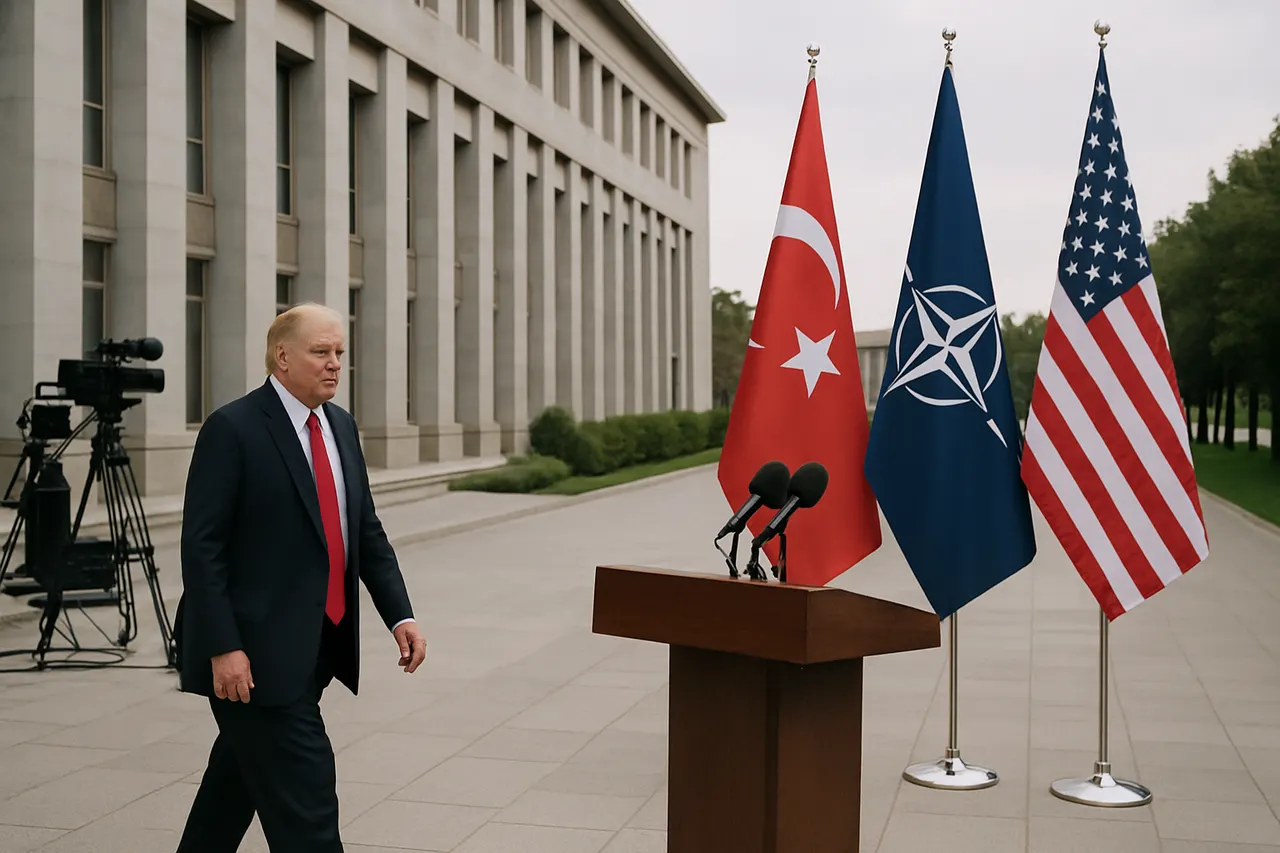
President Donald Trump announced he is attending the NATO summit in Ankara, Turkey, primarily because of Turkish President Recep Tayyip Erdoğan. Speaking to reporters on June 24, Trump described Erdoğan as "a friend" and "a respected leader," indicating that closer defense cooperation between Washington and Ankara could be forthcoming.
This marks a notable shift in U.S.-Turkey relations. In 2019, after Turkey acquired Russia's S-400 air defense system, Washington expelled Turkey from the multinational F-35 fighter program and imposed sanctions on its defense procurement agency the following year, branding Turkey as one of NATO's most challenging allies.
However, experts argue Turkey's strategic value extends beyond personal ties between leaders. Jeffrey noted Turkey's military strength, geographic location, and power projection capabilities make it "essential to maintaining the U.S. perimeter around Eurasia."
Hudson Institute Senior Fellow Can Kasapoğlu Kasapoğlu stated that NATO is refocusing on collective defense fundamentals after decades centered on counterterrorism, increasing pressure on allies to contribute substantial military capabilities.
Regarding military sales, Jeffrey described the proposed $700 million sale of F110 fighter engines to Turkey as a more manageable issue than reintegrating Turkey into the F-35 program. He explained that the presence of the Russian-made S-400 system alongside America's advanced stealth fighter poses a technical risk by potentially exposing sensitive U.S. technology.
Trump's close relationship with Erdoğan, whom he uniquely likes and is liked by, underpins his approach. The president has previously praised Erdoğan as an "incredible partner in the region."
Loading comments.