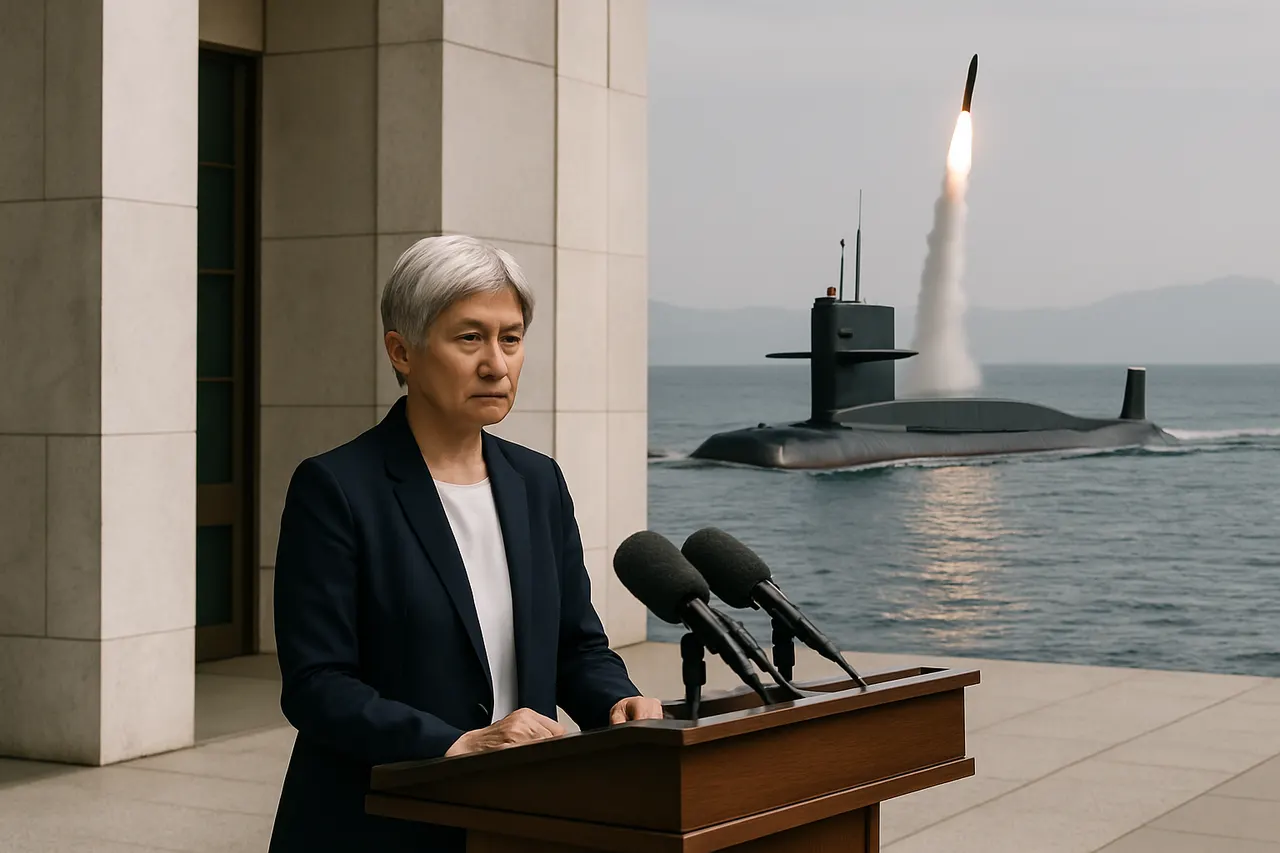
On July 6, 2026, a Chinese navy submarine fired a long-range ballistic missile into international waters in the South Pacific, believed to have splashed down near Tuvalu. The missile, nuclear-capable but carrying an inert dummy warhead, was launched from underwater as part of what the Chinese government described as a routine annual military training exercise. Beijing stated the test was not directed against any specific country or target and that other nations had been notified, urging them not to over-interpret the event.
The missile test drew immediate and pointed reactions from Australia, New Zealand, and Japan. Australian Foreign Minister Penny Wong described the test as "destabilising." Commentators quickly linked the timing of the missile launch to a new defense pact signed earlier that day between Australia and Fiji, suggesting the test served as a reminder of China's missile reach throughout the Pacific.
Experts note that all nuclear powers operating strategic ballistic missiles, whether submarine-launched or land-based intercontinental ballistic missiles, periodically conduct unarmed test-firings to verify weapon functionality, range, and accuracy. Submarine-launched ballistic missiles specifically provide a "second strike" capability, ensuring survivability and response potential following a nuclear attack on the mainland, likely from a major power such as the United States.
Despite the routine explanation, analysts acknowledge a possible political motive behind the test and its timing cannot be ruled out.
Loading comments.