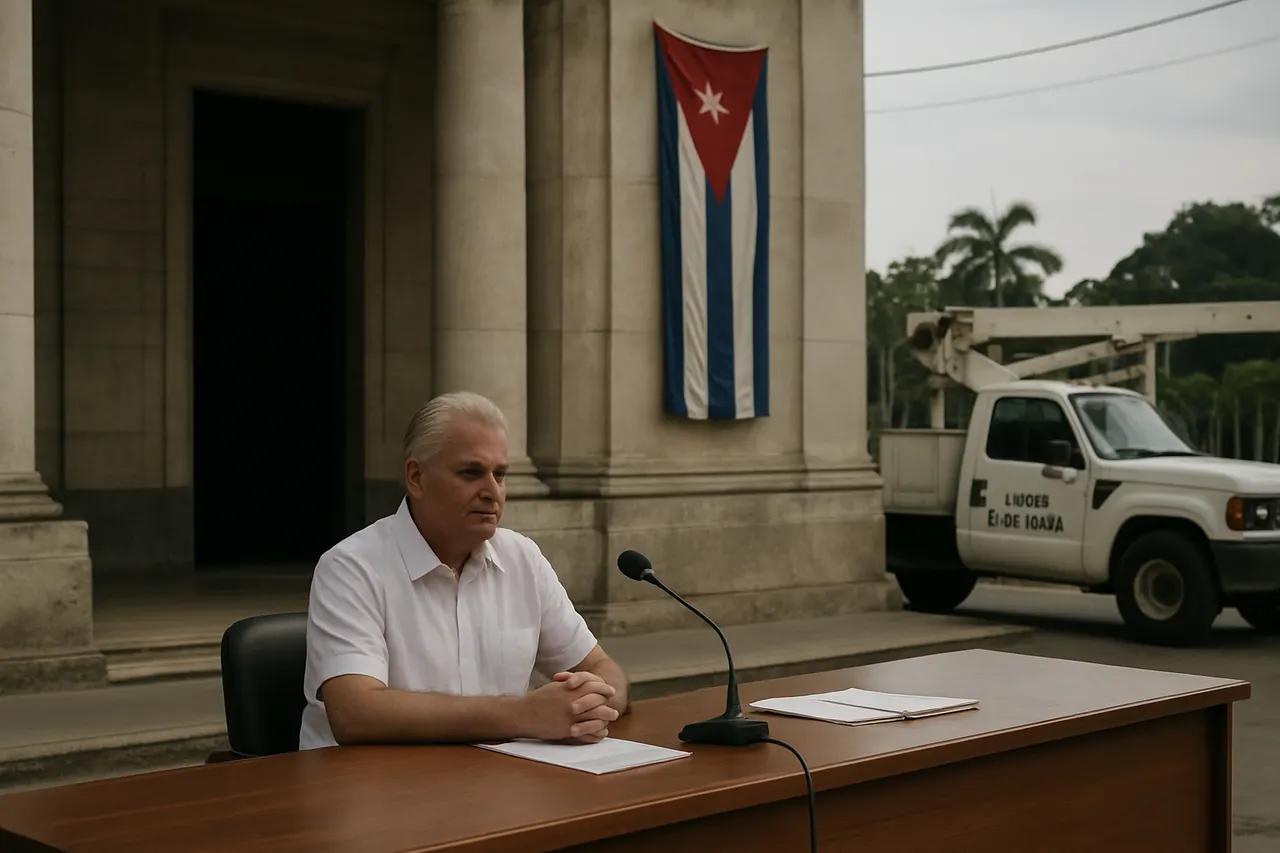
Cubans began regaining electricity on Tuesday after experiencing the third nationwide blackout this year, deepening the crisis caused by an ongoing energy collapse linked to a U.S. fuel blockade. The state electricity company, Union Electrica (UNE), announced a "total disconnection" across the island at midday Monday, leaving all 9.6 million inhabitants without power without specifying a cause.
By early Tuesday, UNE reported that power had been restored to over 30 percent of Havana, including 43 medical centers and nine water distribution facilities. Lazaro Guerra, director of electricity at the Ministry of Energy and Mines, acknowledged on state television that the shortage of fuel "undoubtedly complicates the restoration process," but did not provide a timeline for full repairs.
Cuban President Miguel Diaz-Canel attributed the crisis to U.S. sanctions, stating, "While the U.S. attempts to trigger social unrest through strangulation by blocking fuel access to Cuba, the UNE is mobilizing to reverse the collapse of the National Electric System."
The blackout follows severe power rationing across the country, with some areas of Havana enduring over 30 hours of outages and rural regions facing cuts exceeding 70 hours as the government tries to conserve fuel. Meyboll Font, a 51-year-old self-employed social media community manager, described the situation as agonizing, saying, "Living like this is agony."
The energy crisis intensified after former President Trump cut off oil supplies to Cuba in January, worsening the island's already strained power infrastructure. The U.S. State Department dismissed Cuba's restoration efforts as "superficial smoke signals."
Loading comments.