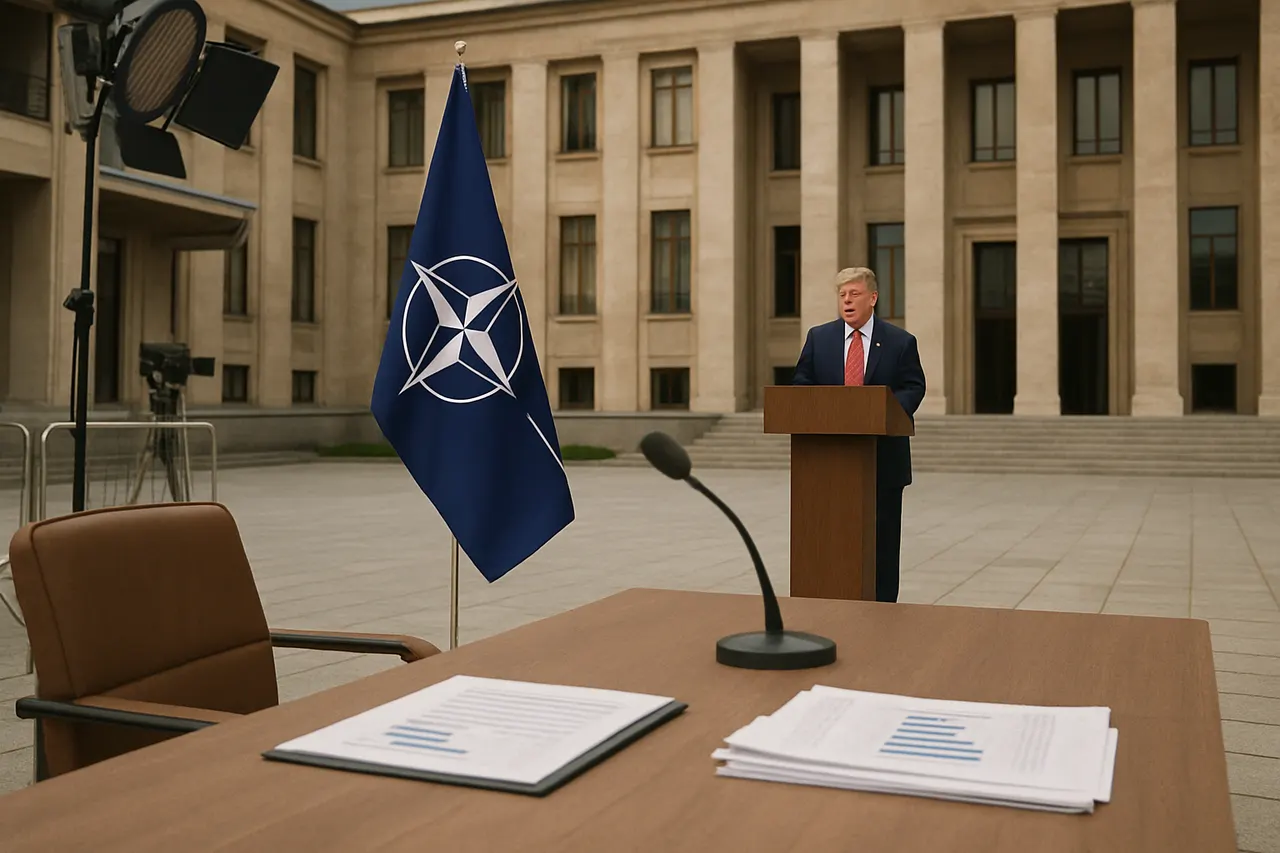
The NATO summit commenced on July 7, 2026, in Ankara, Turkey, with U.S. President Donald Trump emphasizing the need for NATO member countries to increase their defense spending to 5% of GDP. Trump criticized several member states for their refusal to support Washington's military operations in the Middle East, particularly during conflicts involving Iran and the reopening of the Strait of Hormuz.
Trump, who was greeted by Turkish President Recep Tayyip Erdoğan upon arrival, expressed disappointment with NATO allies, stating that the U.S. was "not treated well" despite investing trillions of dollars over decades to protect European countries and Canada from threats posed by the Soviet Union and Russia. He also revealed that he had "tested" NATO members' willingness to assist during the Iran conflict, only to find many unwilling to provide help.
In a bilateral meeting with Erdoğan, Trump renewed his controversial call for the United States to gain control over Greenland, a self-governing territory of Denmark. He argued that Greenland is strategically important for the U.S. and criticized Denmark for not investing sufficiently in the territory. Trump stated, "That should be controlled by the United States, not by Denmark," and noted that the U.S. could withdraw troops from Europe if necessary. However, Danish Prime Minister Mette Frederiksen later affirmed that Greenland would not be discussed at the summit and dismissed the prospect of U.S. acquisition.
Trump also mentioned that he and NATO Secretary-General Mark Rutte had formed a "framework of a future deal with respect to Greenland."
The summit comes amid ongoing shifts in U.S. military posture, including plans to withdraw approximately 5,000 troops from Germany and reduce military equipment there. NATO Secretary-General Mark Rutte described recent military investments as "money well spent."
Additionally, Trump is scheduled to meet with Ukrainian President Volodymyr Zelensky and Syrian President Ahmed al-Sharaa during the summit. After meeting Zelensky, Trump suggested that Russia "should make a deal" to end the war.
Loading comments.