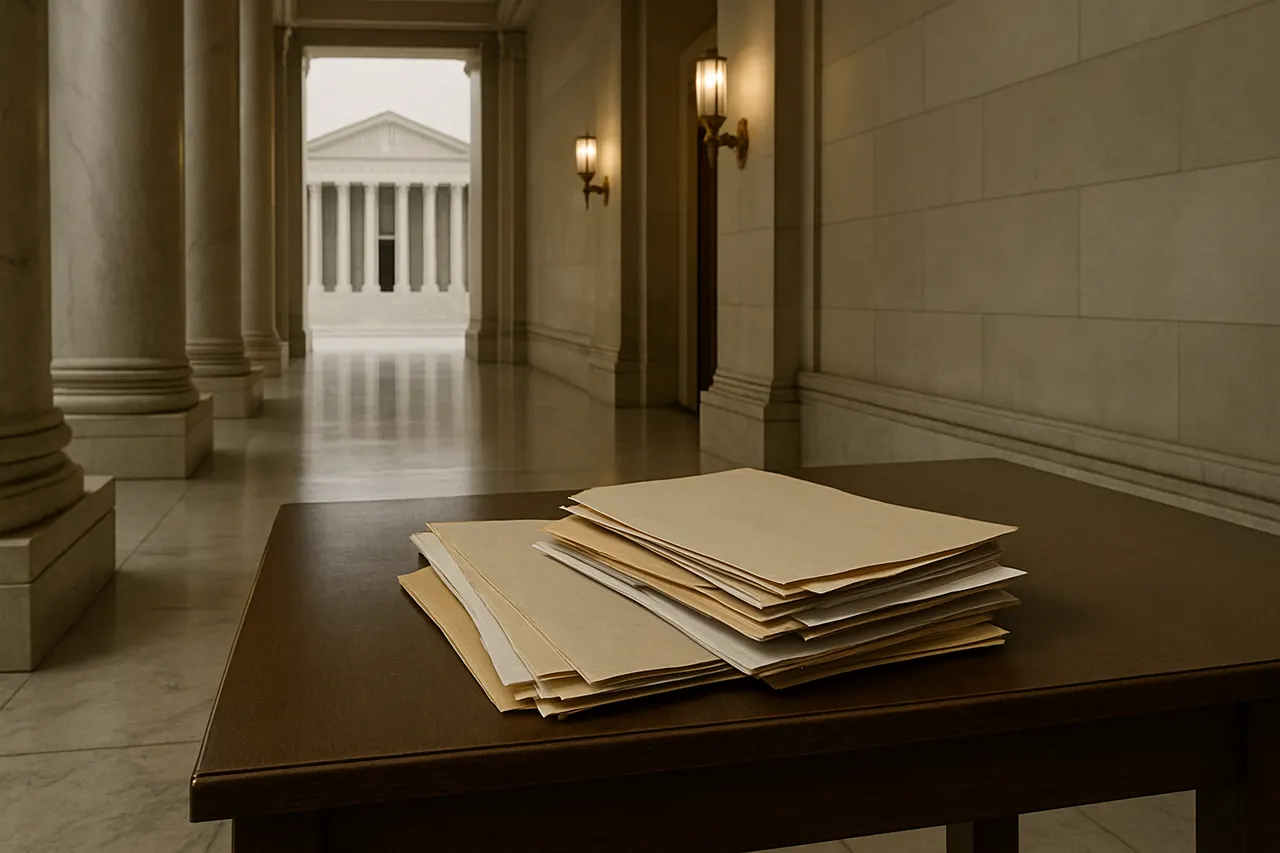
In its term ending October 2025, the U.S. Supreme Court reached a significant yet largely unnoticed milestone: it decided more cases by secret ballot with few signed opinions than through cases argued in open court. These rulings, part of what is known as the "shadow docket," are expedited decisions that often lack detailed legal reasoning or public explanation.
The shadow docket process involves limited briefings and accelerated timetables, with justices rarely providing explanations for their votes or citing precedent. This shift has coincided with increased executive authority under President Donald Trump, with the Court's willingness to bypass its regular procedures seen as empowering the administration.
Donald Ayer, a former deputy solicitor general and deputy attorney general under Presidents Reagan and George H.W. Bush, commented that the Roberts Court's interventions favoring conservatives and Trump allies have "upended American life."
Public scrutiny of the shadow docket intensified in September 2021 when the Court issued a one-paragraph, unsigned opinion refusing to block Texas' Senate Bill 8, known as the "Heartbeat Act," which bans abortion after cardiac activity is detectable, typically around six weeks of pregnancy.
Justice Ketanji Brown Jackson addressed the issue in an April speech at Yale Law School, stating, “We cannot expect the public to have faith in our judicial system if, without clear explanation, we consistently green-light harmful acts that do real damage.”
In a rare shadow docket opinion, Justice Brett Kavanaugh justified decisions allowing immigration enforcement practices known as "Kavanaugh stops," where individuals legally in the country could be detained after brief encounters with ICE agents. ProPublica reported over 170 such detentions.
Critics highlight a stark contrast between lower federal courts and the Supreme Court on these matters. According to a written statement by Raskin, “Lower federal courts have been deciding against the Trump administration in an overwhelming majority of cases with weighty and well-reasoned opinions. Yet when things get to the twilight zone of the shadow docket, the Supreme Court is overturning 100-page opinions with a flippant sentence or two.” He added, “The result is a body that looks less like a Supreme Court and more like a Royal Court rubber stamping the madness and folly of the Trump Administration.”
Loading comments.