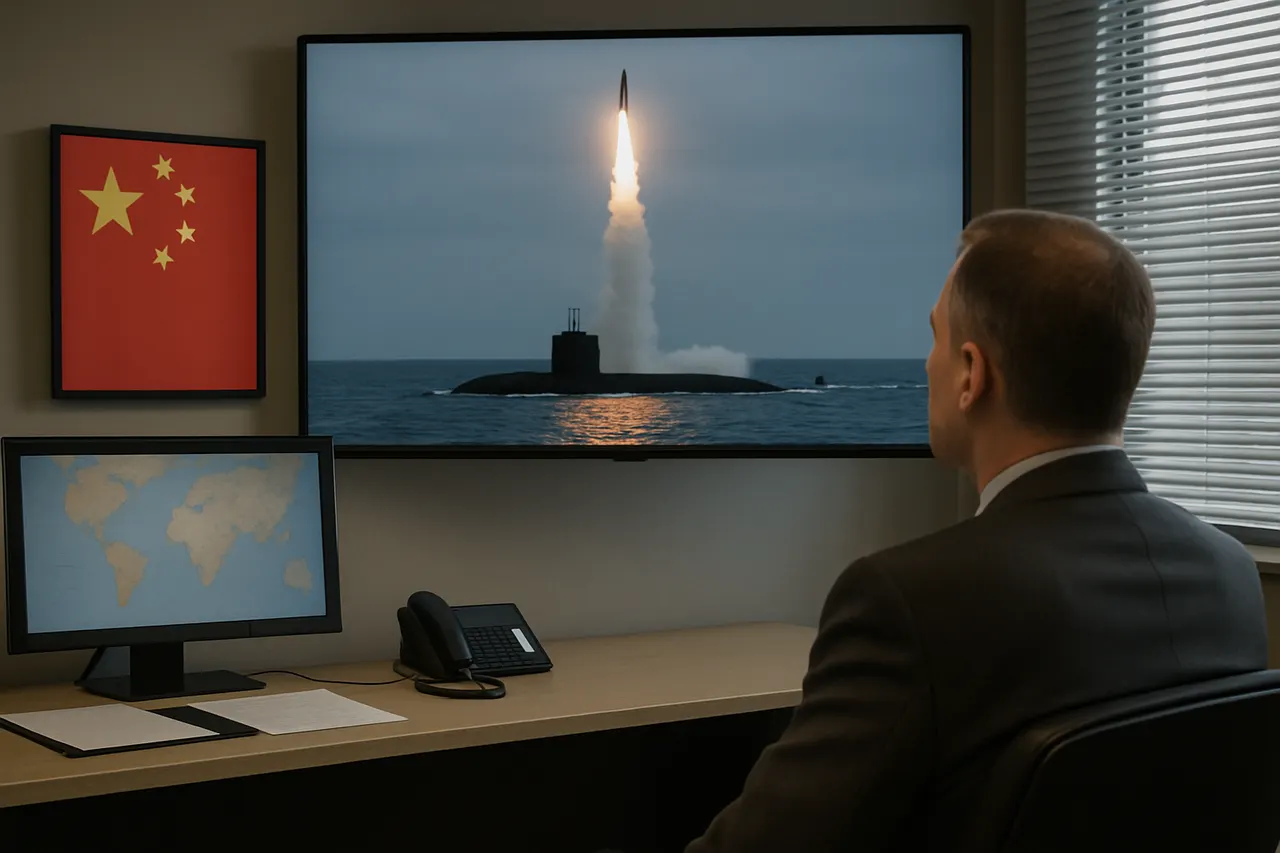
The Trump administration on July 6, 2026, criticized China for conducting a test launch of a submarine-launched, nuclear-capable missile, which the U.S. State Department described as a sign of Beijing's continuing arms buildup.
China carried out the test launch of what analysts believe to be either an advanced JL-2 missile or a new JL-3 multi-warhead submarine-launched ballistic missile (SLBM), a strategic weapon first showcased during a military parade in September 2025. The People’s Liberation Army (PLA) Navy spokesman Wang Xuemeng called the test a “routine arrangement” during annual military training and stated that China provided prior notification of the launch to relevant nations. He added that the test warhead “precisely hit the designated target waters in the Pacific Ocean.”
The launch alarmed regional neighbors including Japan, Australia, New Zealand, and Taiwan, all of which condemned the test according to their government statements.
A U.S. military official, Capt., described the test launch deep into the South Pacific as “a clear and unambiguous declaration from the Chinese Communist Party of its commitment to a first strike nuclear capability.” He noted that the launch, likely from an improved Jin-class/Type-094A submarine, differs substantially from the PLA Strategic Rocket Force’s 2024 test launch of a nuclear-tipped intercontinental ballistic missile.
Fisher of the International Assessment and Strategy Center reported that Chinese officials have indicated the missile is expected to be armed with multiple nuclear warheads, with each missile submarine carrying 12 JL-3 missiles, each capable of launching between five and eight Multiple Independently-targetable Reentry Vehicle (MIRV) warheads.
Additionally, a May 19 U.S. government report stated that Chinese entities have continued to engage in nuclear proliferation and expressed concerns about weaknesses in China’s export control system.
Loading comments.