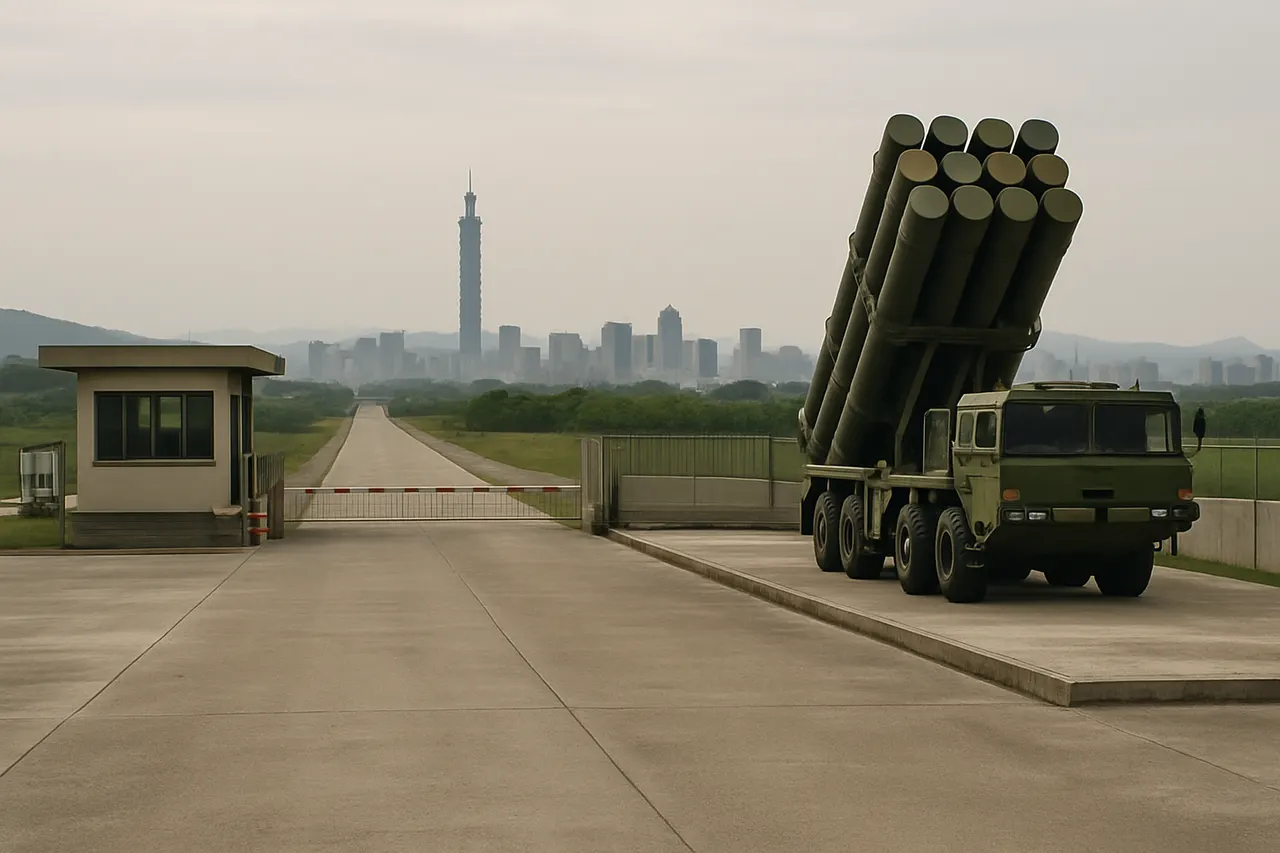
China’s People’s Liberation Army (PLA) has constructed two new multiple missile launch systems at a desert site east of Jilantai city in northwestern Inner Mongolia, according to a report by the China Aerospace Studies Institute, an Air Force think tank.
The newly identified fixed launch systems, set up by the PLA Rocket Force at the Jilantai missile training site, appear designed to fire large numbers of ballistic and cruise missiles rapidly from ground-based multi-cell vertical launch tubes. The launch tubes have a shorter depth than those used for intercontinental ballistic missiles (ICBMs), suggesting they may support short-range ballistic missiles (SRBMs), medium-range ballistic missiles (MRBMs), and cruise missiles.
The report estimates these launchers could deploy medium-range DF-21 missiles, which the PLA has adapted for precision-guided anti-ship and traditional land strike roles. The PLA’s arsenal of these missile types is mostly conventionally armed.
The report highlights that such a conventional quick strike capability could increase PLA leadership’s confidence in compelling Taiwan and U.S. behaviors during a crisis by enabling rapid preparatory strikes or counter-intervention fires early in a conflict. Because the system is a fixed facility with concentrated expensive missiles vulnerable to counterattack, there is a strong incentive to use them quickly, making it potentially suited for a first strike.
Furthermore, the capability to launch rapid fires against multiple targets on Taiwan or U.S. and allied forces could serve as a deterrent to U.S. troop deployments within the First Island Chain or to deepen military cooperation with Taiwan. It could also be used to dissuade U.S. intervention in a Taiwan crisis.
Sources
- Washington Times News, Bill Gertz, July 7, 2026
Summary
China’s military has developed new fixed multiple missile launch systems capable of rapid, large-scale missile launches potentially targeting Taiwan and regional U.S. and allied forces, according to an Air Force think tank report. These systems were identified via satellite imagery in Inner Mongolia and are believed to support a range of missile types including medium-range DF-21 missiles adapted for anti-ship and land strike missions. The report suggests these capabilities could influence regional military dynamics and crisis behaviors.
Loading comments.