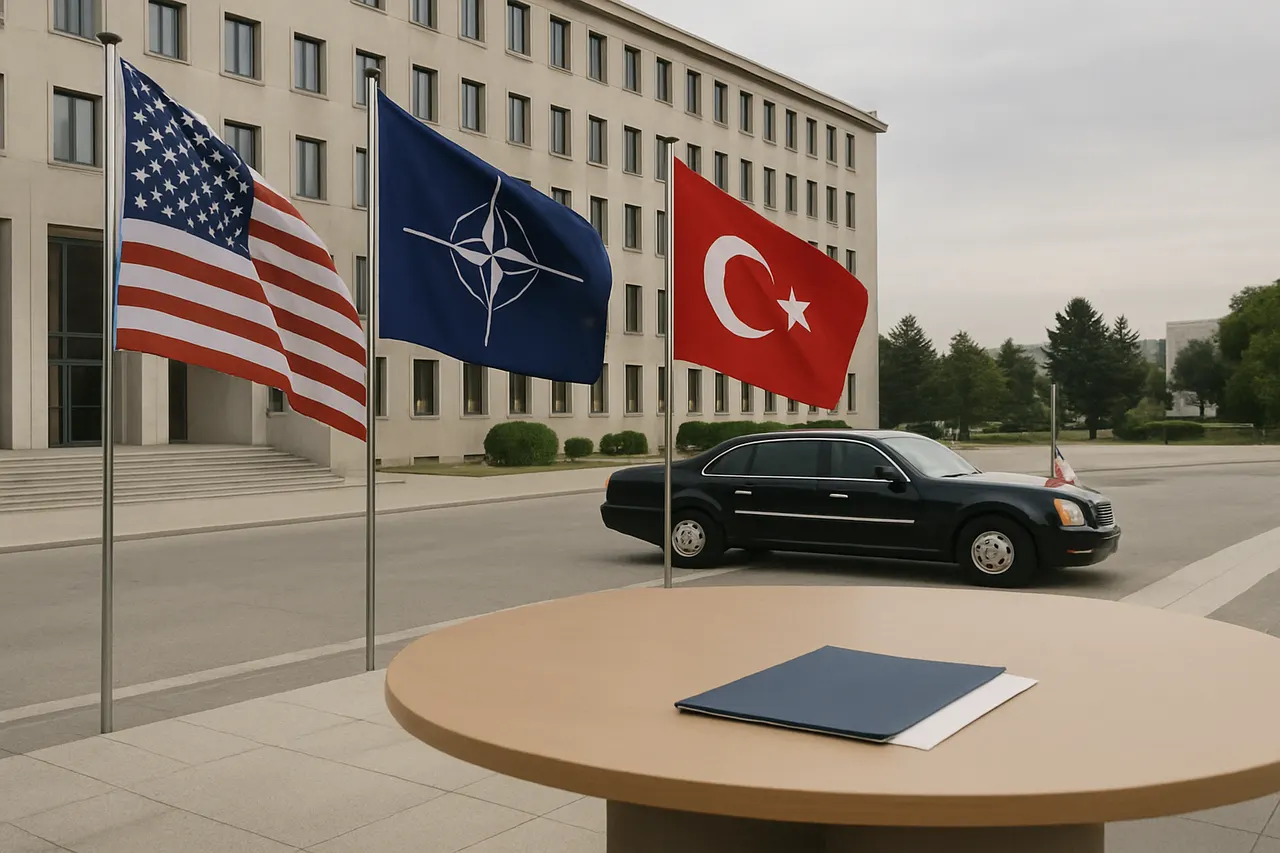
President Donald Trump arrived in Ankara, Turkey, on Tuesday to participate in a high-stakes NATO summit addressing key issues including the Russo-Ukrainian War, artificial intelligence, NATO spending, and peace efforts in the Middle East.
According to multiple posts from official Trump administration sources, Trump departed for the summit on Monday night. A NATO press release confirmed that diplomats and leaders from 32 NATO countries are attending the event alongside Trump.
White House principal deputy press secretary Anna Kelly stated that Trump has expressed clear disappointment with NATO and its allies, emphasizing that Europe must assume greater responsibility for its own defense. Kelly noted, "President has effectively restored America’s standing on the world stage and strengthened relationships abroad – but he simultaneously will never allow the United States to be treated unfairly and taken advantage of by so-called ‘allies.’"
Former Czech Republic Minister of Foreign Affairs Jan Lipavský, speaking at a Center for European Policy Analysis (CEPA) briefing, highlighted the urgency for tangible changes, suggesting the summit might focus on initiatives like "NATO 3.0," which centers on European countries increasing their defense spending.
NATO Secretary-General Mark Rutte, during a June 17 press conference, remarked that as the United States adjusts its defense pledges, other NATO allies have stepped up their contributions, sometimes fully or nearly so. He also assured that NATO allies could compensate for the United States' reduced capabilities, which are estimated to be valued between $40 billion and $50 billion.
Data from the Atlantic Council estimates the United States as NATO’s dominant defense spender with $980 billion in 2025, far surpassing the United Kingdom’s $92.8 billion and France’s $68.9 billion. Smaller NATO members like Montenegro, North Macedonia, and Albania contribute significantly less.
Former NATO Assistant Secretary General for Intelligence and Security David Cattler emphasized the need for clarity on the "NATO 3.0" concept during the summit, as the alliance transitions from burden sharing to burden shifting.
Loading comments.