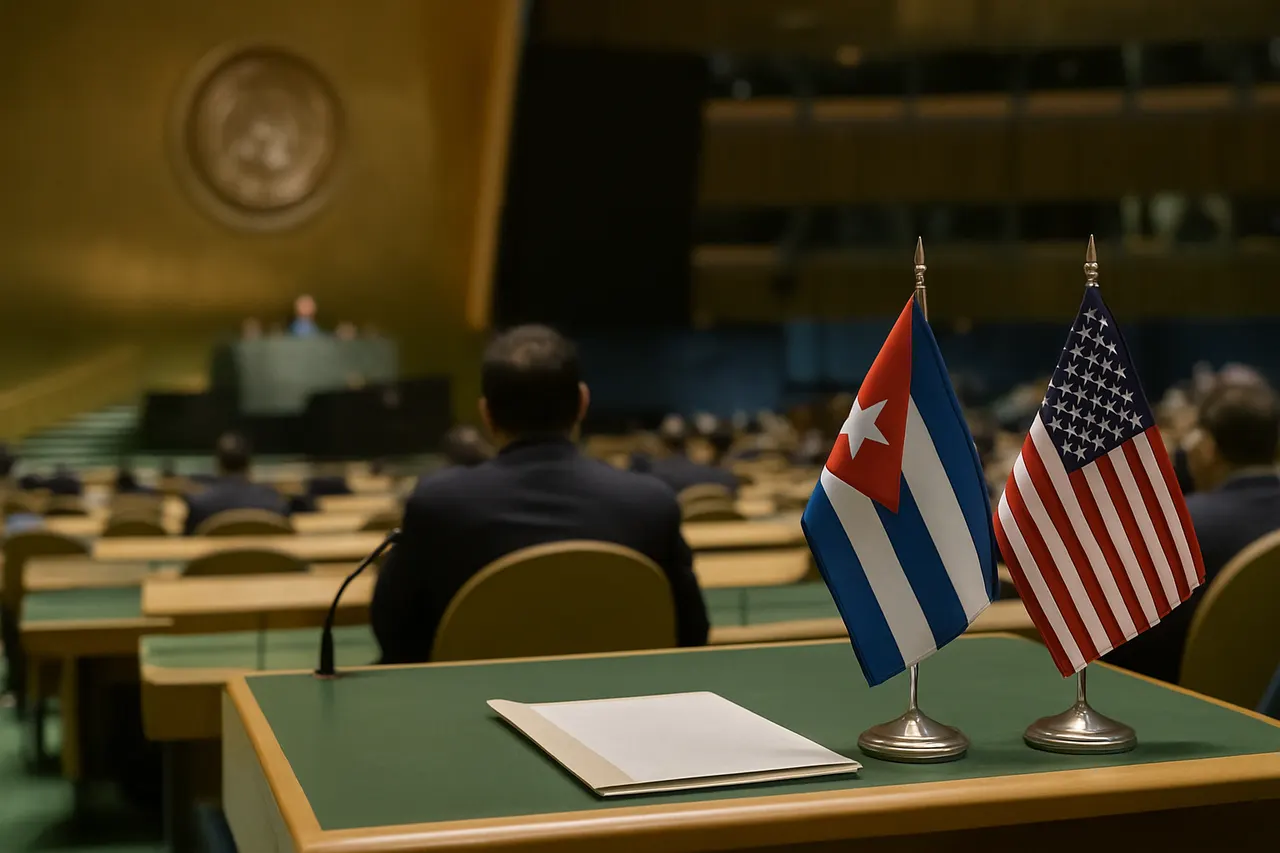
Diplomatic tensions between Washington and Havana have intensified in recent months, culminating in a heated debate at the United Nations General Assembly on July 7, 2026.
Cuba’s Minister of Foreign Affairs, Bruno Rodriguez, denounced the US embargo as a "multi-dimensional, non-conventional warfare" that has lasted nearly seven decades and has grown "ever more cruel and more ruthless during the last seven months." He described the blockade as a form of "collective punishment" against the Cuban population and called on the UN to address what he termed a "ruthless crime."
Rodriguez also noted that the embargo caused a record $8 billion in damage to Cuba between March 2025 and February 2026, marking a seven percent increase compared to the previous year.
Meanwhile, the European Union’s ambassador to the UN, Stavros Lambrinidis, acknowledged the embargo’s impact but emphasized that "the dire situation of the Cuban people is not only due to the embargo."
The Communist Party of Cuba has recently approved unprecedented economic reforms, including opening the economy amid ongoing US pressure.
Support for Cuba’s position at the UN has slightly weakened, with 165 member states voting in favor of condemning the embargo last October, down from 187 the previous year.
Reporting from UN headquarters in New York, Al Jazeera’s Gabriel Elizondo observed that the exchanges at the UN underscore the deep and persistent tensions between Havana and Washington.
Loading comments.