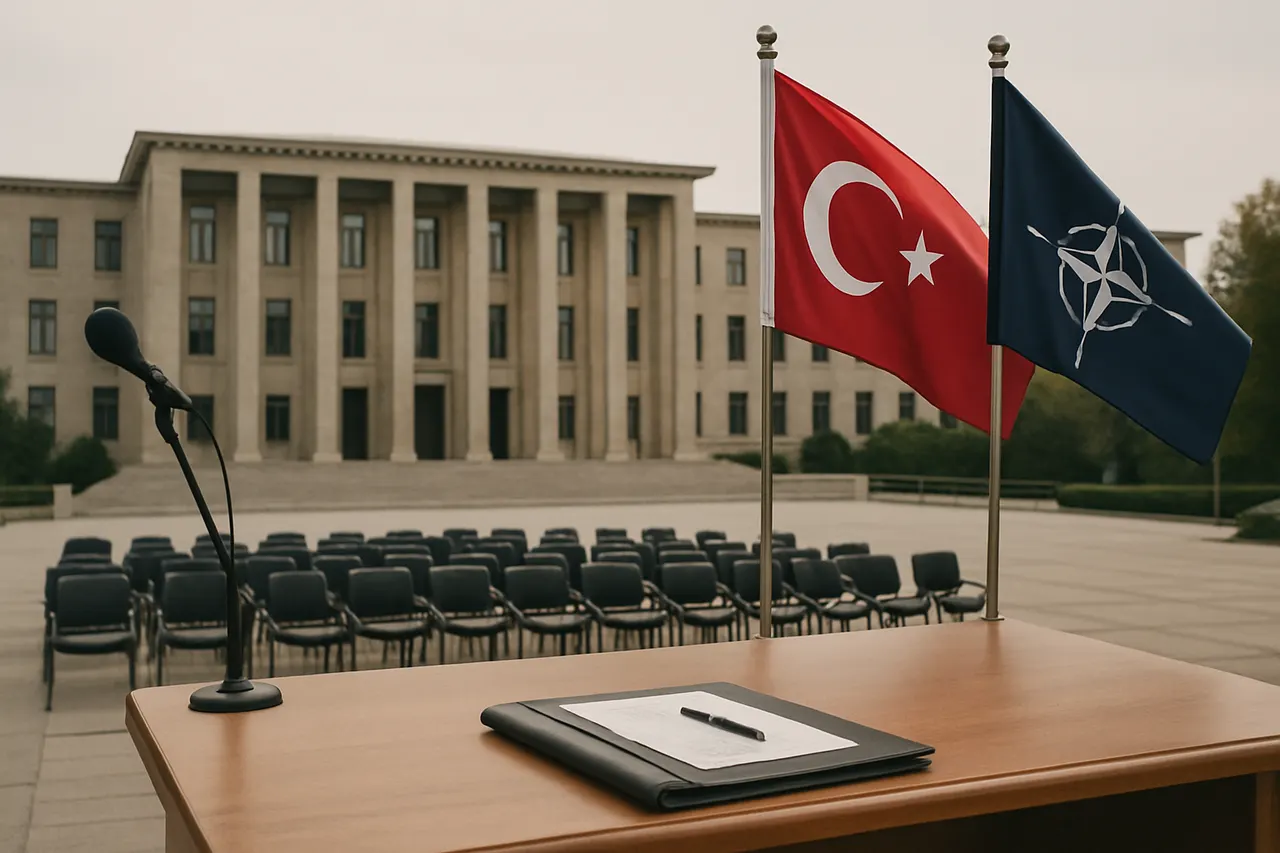
President Trump and world leaders gathered in Ankara, Turkey, for a NATO summit focused on critical alliance issues including defense spending, U.S. troop commitments in Europe, and support for Ukraine.
Trump emphasized his campaign to increase defense contributions from NATO members. However, only five of the 32 NATO countries are projected to meet the updated 3.5 percent defense spending goal this year, raised from 2 percent at last year's Hague summit.
A major point of contention is Trump's indication during a bilateral meeting with Turkish President Recep Tayyip Erdoğan that he plans to lift sanctions and allow Turkey back into the U.S. F-35 fighter jet program. This move faces bipartisan opposition in Congress, where critics warn that Turkey has not met the necessary criteria, notably its continued use of Russian S-400 missile defense systems, and could share sensitive technology with U.S. adversaries Russia and China.
The alliance is also closely watching potential changes regarding sanctions on Syria. A bipartisan group of lawmakers has urged Trump to remove Syria from the list of state sponsors of terrorism (SST), a key step for Syria's reintegration into the international community following the overthrow of Bashar al-Assad in December 2024.
In related security concerns, Ukrainian President Volodymyr Zelensky reported a recent attack involving 68 missiles and 351 drones, noting that Ukrainian forces successfully intercepted drones and cruise missiles but not Russian ballistic missiles.
Dutch Prime Minister Mark Rutte announced new NATO initiatives to enhance security and economic growth, including plans to acquire five advanced, high-altitude, long-endurance unmanned aircraft from Northrop Grumman.
The summit underscores ongoing challenges within NATO as it navigates geopolitical tensions and internal disagreements over defense policies and partnerships.
Loading comments.