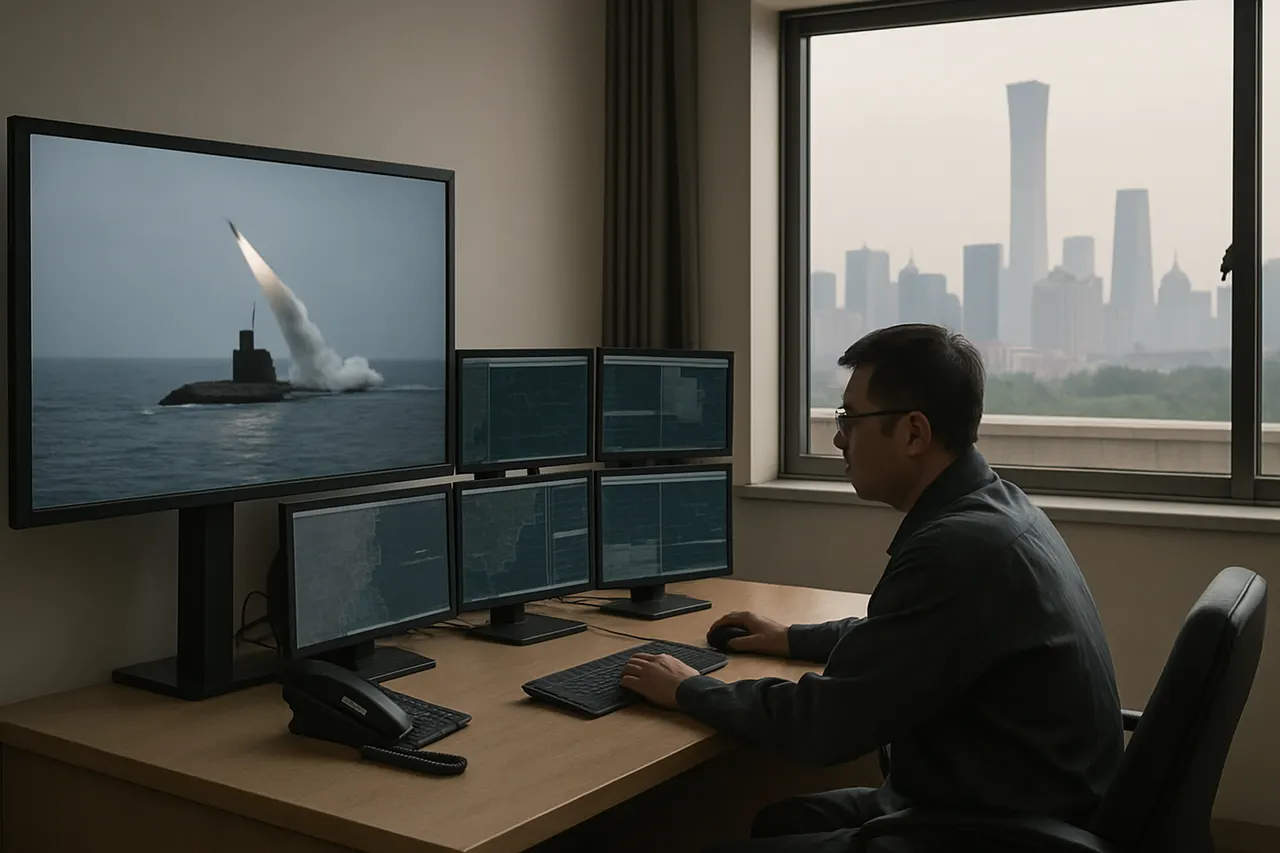
Earlier this week, China launched an intercontinental ballistic missile into the Pacific Ocean, marking the first test of its long-range missile arsenal in two years and the first-ever launch of such a missile from a nuclear-powered submarine. The missile is believed to be the JL-3, a new intercontinental-range submarine-launched ballistic missile first publicly displayed at a Beijing military parade last year.
The JL-3 missile has an estimated range of about 10,000 kilometres, placing countries like Australia within striking distance and raising concerns about a new nuclear threat across the Pacific region.
China stated the test was a routine training exercise and was not targeted at any country. It also claimed to have tripled the size of its nuclear arsenal from 200 to over 600 weapons in the past six years.
This rapid growth has been supported by a substantial increase in defense spending, which has risen 13-fold over the last 30 years, according to the US-based think tank, the Centre for Strategic and International Studies (CSIS). CSIS also noted that China is undergoing a significant military expansion, with the Pentagon estimating the nuclear missile count could exceed 1,000 by 2030.
A decade ago, China's submarine-launched ballistic missile capability was limited to the JL-1, with a range of 2,000 to 3,000 kilometres. The recent test and deployment of the JL-3 represent a major advancement in China's strategic military capabilities.
Professor Parker described the latest missile test as a public declaration of China's achieved capabilities.
Sources
- ABC Australia News
- Reuters (via ABC Australia News)
- Centre for Strategic and International Studies (CSIS)
Loading comments.