_in_Washington_DC_April_26-27,_2016.jpg)
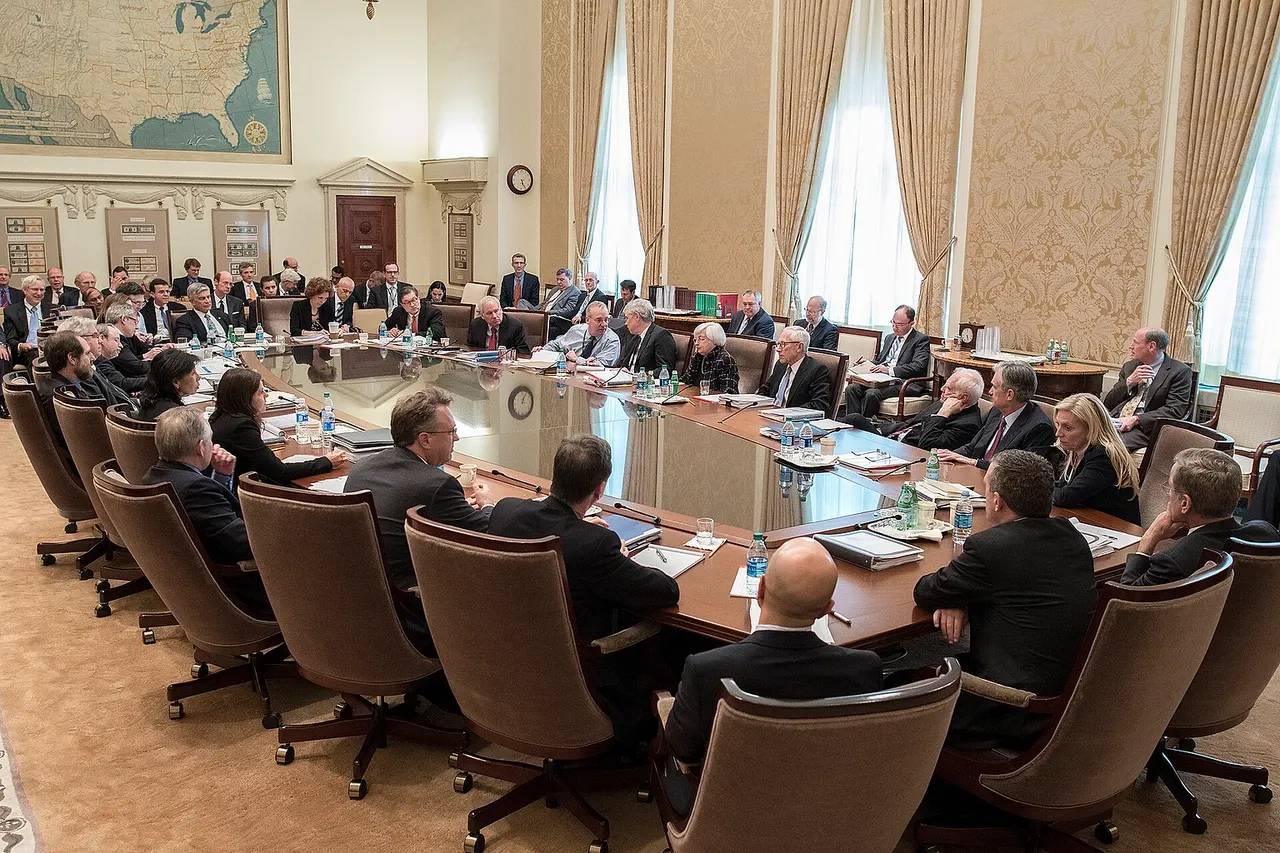
On Wednesday, July 29, 2026, U.S. stocks fell significantly after the Federal Reserve opted to keep interest rates unchanged despite persistent inflation pressures. The Federal Open Market Committee (FOMC) voted 9-3 to maintain the baseline interest rate range at 3.5 to 3.75 percent, marking the fifth consecutive meeting without a rate hike.
The Dow Jones Industrial Average experienced its largest drop since April 2025, closing down 1,153.18 points, or 2.19 percent. This decline matched levels last seen when President Trump introduced his “Liberation Day” tariffs. The S&P 500 fell by 1.52 percent to 7,316.15 points, while the Nasdaq composite dropped 1.74 percent to 24,442.94 points, retreating from its early June all-time closing high of 27,093.90.
Fed Chair Kevin Warsh, speaking after the decision, emphasized that inflation remains above the central bank’s 2 percent target, despite cooling from 4.2 percent in May to 3.5 percent in June according to the consumer price index. Warsh also noted that the Fed’s move away from forward guidance has led markets to react more directly to events, stating, “So [markets are] reacting to events, I would say, much more directly over the 42 days since we last met,” referencing the last FOMC decision on June 17.
The Fed’s decision and Warsh’s comments underscore ongoing concerns about inflation and the cautious approach the central bank is taking in its monetary policy.
Loading comments.