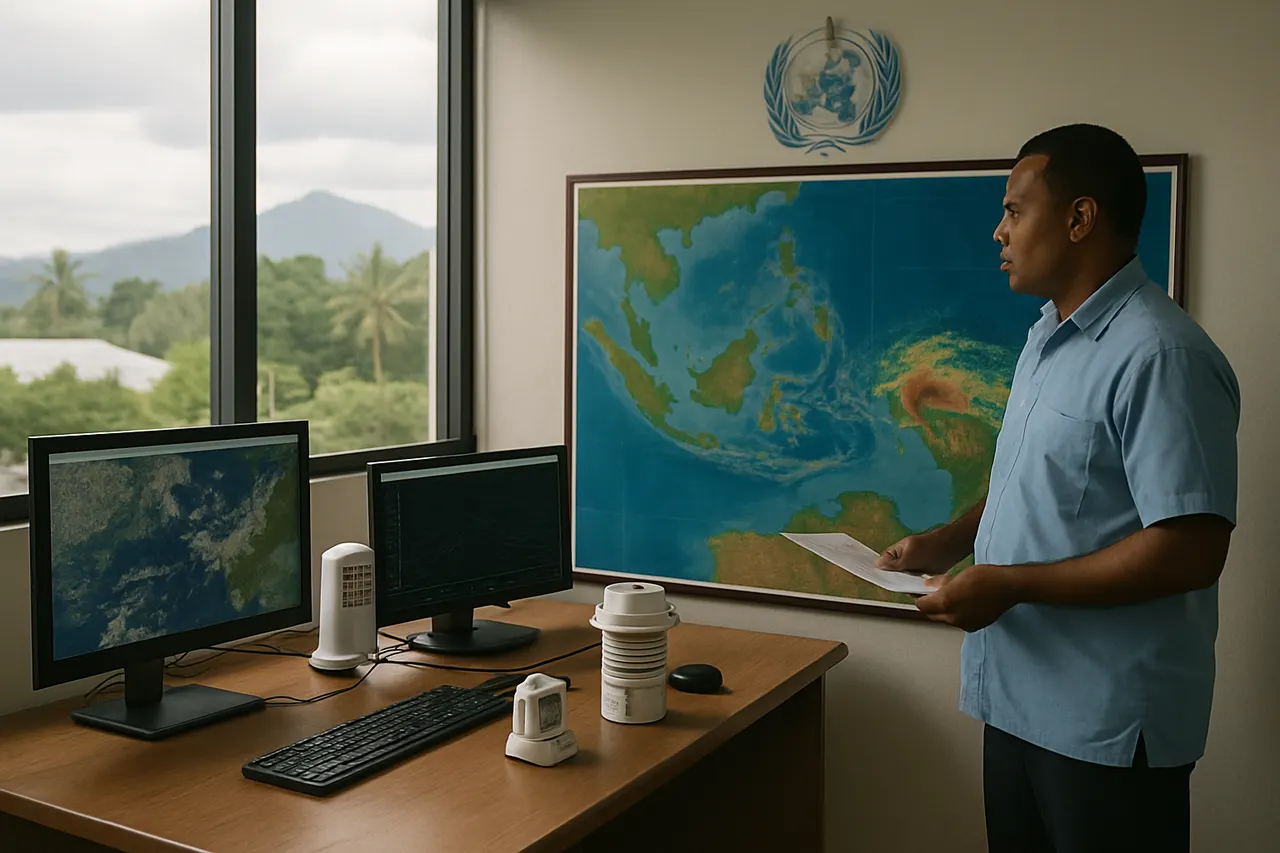
The Southwest Pacific is confronting increasing climate challenges as its ocean waters become hotter, more acidic, and more hazardous for coastal populations, according to a report by the World Meteorological Organization (WMO) published on July 7, 2026.
The latest State of the Climate in the South-West Pacific report revealed that 2025 was the second warmest year on record for the region, trailing only 2024, with average surface air temperatures approximately 0.37 °C above the 1991–2020 average. The report highlights the threats posed by rising sea levels to low-lying island nations and coastal settlements, alongside damage to ecosystems vital for food security, tourism, fisheries, and local economies caused by marine heatwaves and ocean acidification.
A significant concern raised is the potential disappearance of the region’s last remaining tropical glacier, located in Indonesia. The glacier’s ice cover has shrunk to about two percent of its size in 1988 and may vanish by the end of 2026 or early 2027.
“For many countries and territories in the Southwest Pacific, the ocean is central to livelihoods, economies and resilience,” said WMO Secretary-General Celeste Saulo. She noted that in 2025, the region experienced warming oceans, rising sea levels, marine heatwaves, ocean acidification, tropical cyclones, and continued loss of tropical glacier ice.
The WMO also reported record-high ocean heat content in the upper 700 meters south of Australia and in the southern Tasman Sea, as well as in parts of the tropical North Pacific between the Philippines and Hawaii and near Sumatra, Indonesia. Although marine heatwave coverage in 2025 was lower than in 2024, it was the most extensive ever recorded in a year without an El Niño event, which the agency described as “a worrisome sign for 2026, with a potentially strong El Niño event now developing.”
During the summer of 2024/2025, marine heatwaves around Australia caused coral bleaching in both eastern and western reef systems in the same season for the first time, underscoring the need for effective early warning systems.
Armida Salsiah Alisjahbana, Executive Secretary of the United Nations Economic and Social Commission for Asia and the Pacific (ESCAP), stated, “Across Asia and the Pacific, heat is intensifying multi-hazard risks, intersecting with food systems, public health, infrastructure and oceans, and placing new pressures on health and livelihoods.”
Loading comments.