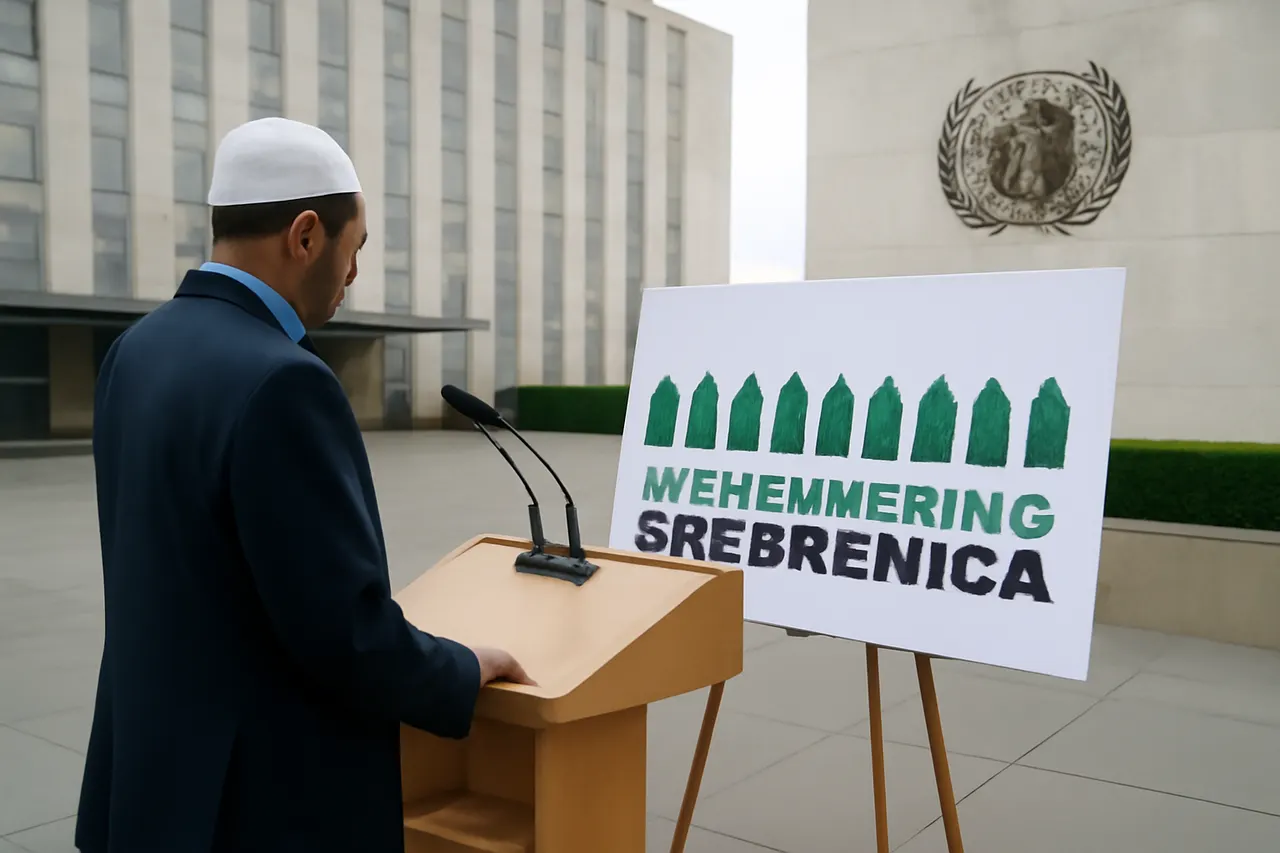
On July 9, 2026, the United Nations paused to remember the more than 8,000 Bosnian Muslim men and boys killed in the town of Srebrenica in July 1995, as well as the women and survivors who have since worked to rebuild their lives.
The massacre, carried out by the Bosnian Serb army, was the largest in Europe since the Holocaust and one of the darkest episodes in the Balkan wars following the breakup of the former Yugoslavia. Srebrenica had been declared a safe area under UN Security Council Resolution 819 (1993), but the Bosnian Serb forces overran it. Many victims had sought protection at the UN compound in nearby Potočari but were separated from their families, executed, and buried in mass graves.
Chaloka Beyani, UN Special Adviser on the Prevention of Genocide, stated that the genocide “will forever lay heavily on the collective conscience of the international community, the United Nations, and the modern history of our world.”
The UN Secretary-General, in remarks read by his Chef de Cabinet Earle Courtenay Rattray, recalled that following Srebrenica, “the world once again said: ‘Never again.’”
Annalena Baerbock, General Assembly President, highlighted that genocide, as witnessed in Srebrenica, Rwanda, and elsewhere, “does not begin with mass graves” but with hatred, discrimination, divisive rhetoric, and policies that strip people of their dignity.
The remembrance serves as a solemn reminder of the consequences of hatred and the importance of upholding human rights and dignity worldwide.
Loading comments.