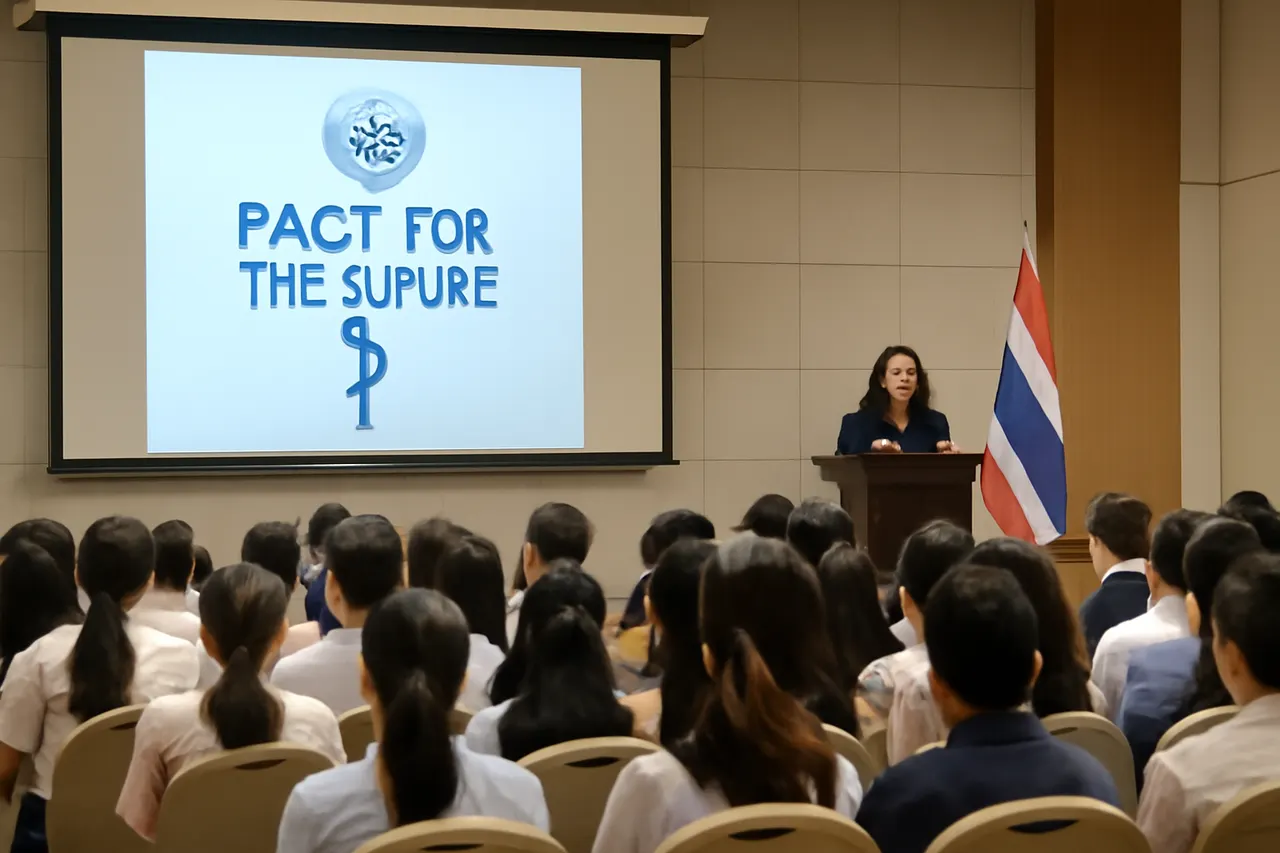
Nearly 400 youth leaders from Thailand recently took part in a national dialogue commemorating the 80th anniversary of Thailand’s membership in the United Nations. The event served as a platform for young people to lead discussions on implementing the Pact for the Future, the UN’s global framework designed to address current challenges while safeguarding the interests of future generations.
The Pact, adopted by UN Member States in September 2024, is founded on a crucial principle: future generations, those not yet born, cannot represent themselves. This principle underscores the importance of youth involvement in policymaking and global governance.
UN Resident Coordinator in Thailand, Michaela Friberg-Storey, emphasized that achieving the Pact’s goals hinges on "strong partnerships across society, driven by the energy, creativity and leadership of young people." She highlighted the pivotal role youth play in transforming the Pact’s ambitions into tangible outcomes.
Six youth panellists shared insights with UN News on what it takes to ensure young people’s voices are effectively heard and valued. Rattanachart Paengkum stressed that enhancing youth participation is less about establishing new institutions and more about improving the functionality of existing ones. He noted that meaningful participation requires trust and shared decision-making.
Marisa Yapangku, President of the Indigenous Youth Seed Network of Thailand, pointed out that youth engagement must extend beyond capital cities and formal conference settings to genuinely reflect the experiences of indigenous communities.
Nattanicha Kattiyavara, a youth advisor to the UN Youth Office and founder of The Burnout Advocate Initiative, emphasized that participation is not merely about being heard but also about enabling young people to sustain their contributions over time. She advocated for recognizing wellbeing as an integral component of sustainable civic engagement.
Themba Kalua, Director for Pact for the Future Implementation in the Executive Office of the UN Secretary-General, reiterated the Pact’s foundational message: “Future generations are not in the room to speak for themselves.” This highlights the responsibility of current generations, especially youth, to advocate on behalf of those yet to come.
This national dialogue in Thailand reflects a broader global movement to empower youth as key stakeholders in shaping public policy, climate action, inclusion, indigenous rights, disability access, and youth wellbeing. The event marks a significant step in fostering intergenerational partnerships essential for lasting change.
What to Watch
The effectiveness of the Pact for the Future will depend on how well governments and societies integrate youth leadership and participation into decision-making processes. Monitoring the progress of youth-driven initiatives and partnerships in Thailand and beyond will be crucial in assessing the Pact’s impact.
Loading comments.