_04.jpg)
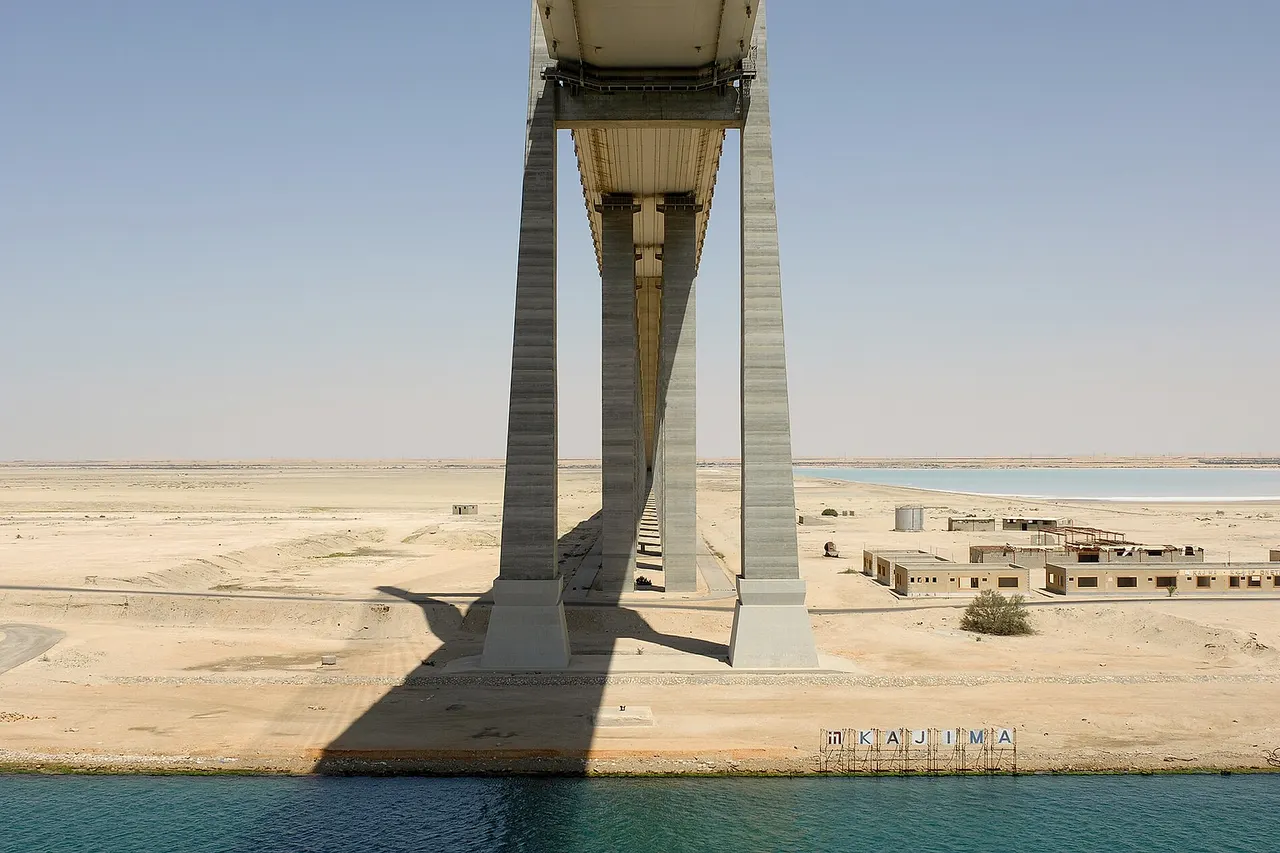
The Suez Canal, a crucial 193-kilometer waterway connecting the Mediterranean and the Red Sea, has historically saved ships traveling between Europe and Asia approximately 10,700 kilometers, making it one of the world's most important trade routes since its opening in 1869.
However, unrest in the Middle East, including the ongoing US-Iran war and attacks by the Houthi rebel group in Yemen targeting shipping in the Bab el-Mandeb Strait, has led to a significant decline in traffic through the canal. Ships must pass the Bab el-Mandeb and the Yemeni coast to reach the Suez Canal, and disruptions there jeopardize canal revenues.
According to Egyptian President Abdel-Fattah el-Sissi, Egypt likely lost around $7 billion (€6.15 billion) in 2024 due to decreased traffic. The Associated Press reported that Suez Canal revenues fell from $10.25 billion in 2023 to about $4 billion in 2024, with the number of ships passing through dropping from over 26,000 to just above 13,000 during the same period. The Reuters news agency noted that losses could reach as much as $8 million (€7 million) in a single month.
Despite these setbacks, revenues from canal transits increased during 2025 and 2026, mainly because oil from Gulf states was transported via Saudi pipelines to the Red Sea and then onward through the canal.
Economically, Egypt is in a very ambivalent situation. Higher energy prices have made imports more expensive and driven up inflation. The regime under President al-Sissi is pursuing a two-pronged approach, aiming to maintain good relations with all parties involved while seeking rapid de-escalation of tensions.
The uncertainty in the Red Sea and potential disruptions to the passage through Bab el-Mandeb continue to pose risks to the Suez Canal's economic stability.
Loading comments.